• One of the easiest criticisms to throw at an older rapper is also one of the laziest.

    “He’s 40 years old still rapping.”

    “She needs to grow up.”

    “He has Peter Pan syndrome.”

    The implication is simple: hip-hop belongs to youth, and anyone who continues participating in the culture beyond a certain age must somehow be refusing adulthood.

    But that criticism misunderstands both creativity and maturity.

    Ironically, the Peter Pan comparison itself contains the answer.

    The original Peter Pan is remembered as the boy who refuses to grow up. But one of the most interesting extensions of that story comes from the 1991 film Hook, where Robin Williams plays a version of Peter Pan who did exactly what critics supposedly want everybody to do.

    He grew up.

    He left Neverland.

    He became Peter Banning, built a career, got married, had children and entered the adult world.

    And something was still missing.

    That makes Hook a useful case study for understanding one of the biggest strategic mistakes aging artists can make: believing that maturity requires abandoning the imagination, personality and creative instincts that made them successful in the first place.

    The Wrong Definition of Growing Up

    The problem with the “Peter Pan syndrome” insult is that it assumes adulthood is primarily about subtraction.

    Stop dressing like that.

    Stop talking like that.

    Stop making that kind of music.

    Stop enjoying those things.

    Stop being playful.

    Stop competing.

    Stop expressing yourself that way.

    Eventually, according to this logic, adulthood becomes a process of gradually removing anything associated with youth until the person becomes socially acceptable.

    That is not necessarily maturity.

    Sometimes it is simply conformity.

    There is an important difference between refusing to grow and refusing to erase yourself.

    A rapper can grow older without pretending that hip-hop was merely a phase.

    A producer does not have to stop making beats because he turns 50.

    A DJ does not become immature because she still loves clubs, turntables or new music.

    A rapper who spent decades developing flow, songwriting ability, stage presence and musical instincts should not suddenly abandon those abilities because someone on social media decided creativity has an expiration date.

    Growing older should expand the artist.

    It should not erase the artist.

    What Hook Actually Teaches

    Hook becomes interesting because Peter Pan eventually experiences both extremes.

    As the legendary Peter Pan, he represents endless childhood.

    As Peter Banning, he becomes almost completely absorbed by adulthood.

    He has responsibilities, work obligations and a family, but the imaginative side of him has nearly disappeared.

    When Captain Hook abducts Peter’s children and brings them to Neverland, Peter is forced to return to a world he has forgotten.

    His challenge is not simply defeating Hook.

    He has to remember himself.

    He has to rediscover imagination, playfulness, courage and belief.

    The lesson is not that Peter should abandon adulthood and permanently return to childhood.

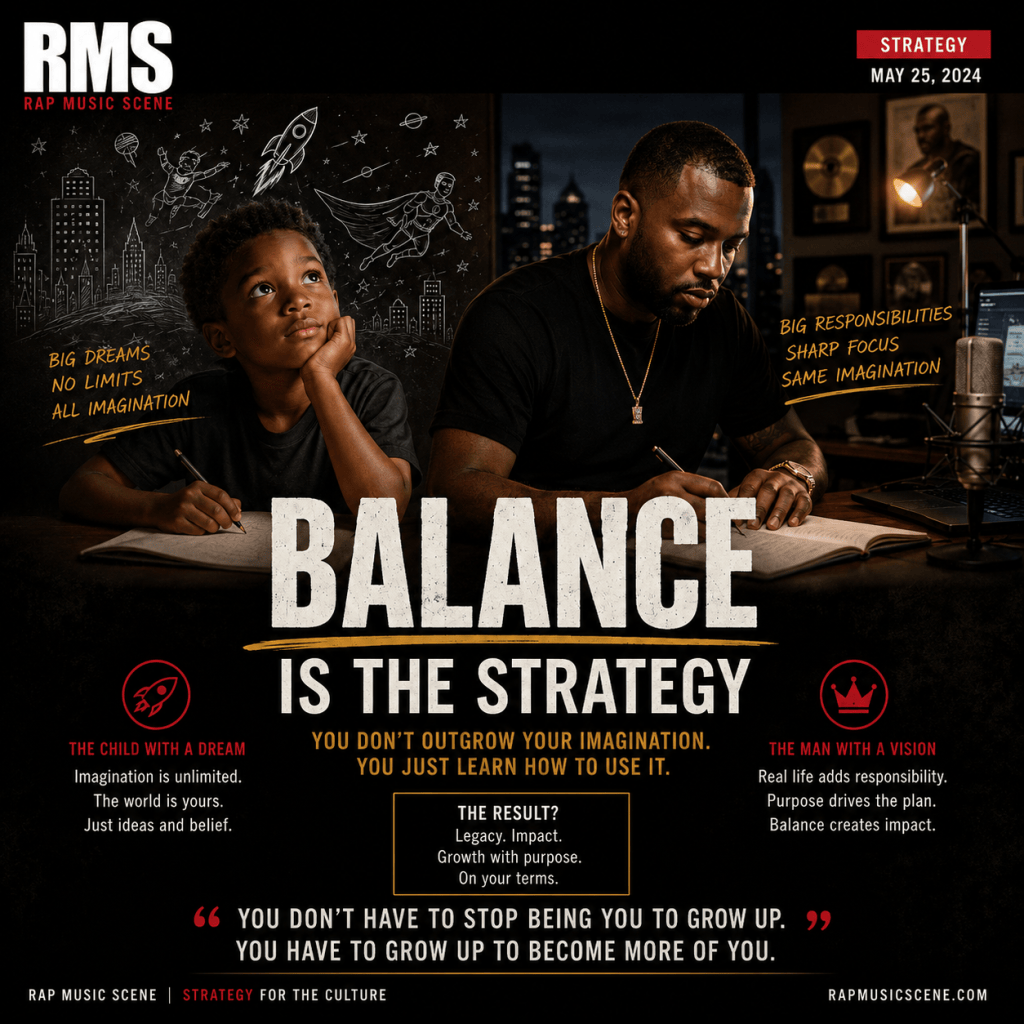
    The lesson is balance.

    Peter’s mistake was believing he had to choose between being Peter Pan and Peter Banning.

    His growth comes from realizing that both identities can exist within the same person.

    That distinction matters enormously for artists.

    Aging Artists Need Integration, Not Reinvention by Force

    There is often pressure on veteran rappers to perform adulthood according to someone else’s expectations.

    Once an artist reaches 40, 50 or beyond, people begin creating arbitrary rules for what that person should sound like.

    They should only make serious records.

    They should rap exclusively about investments.

    They should dress conservatively.

    They should abandon slang.

    They should stop competing with younger rappers.

    They should no longer make energetic records.

    They should become mentors instead of participants.

    But none of those things automatically represent maturity.

    An artist can discuss business, family, mortality, politics or legacy and still make a club record.

    He can own real estate and still rap aggressively.

    She can raise children and still perform onstage.

    Someone can have tremendous financial responsibility while still enjoying sneakers, jewelry, video games, fashion, sports cars or nightlife.

    Human beings are multidimensional.

    Artists especially so.

    The stronger strategy is not abandoning earlier dimensions of identity.

    It is adding new ones.

    The Strategic Model: Addition Instead of Replacement

    A veteran rapper should think about aging as an expansion strategy.

    At 20, an artist might primarily have experience with ambition, relationships, neighborhoods, competition and discovery.

    At 40, that same artist may also understand business, parenthood, loss, leadership, health, betrayal, ownership, legacy and long-term consequences.

    Those experiences do not require deleting the 20-year-old artist.

    They give that artist more material.

    The strategic mistake occurs when someone believes maturity means replacing their previous identity entirely.

    Instead, mature artistry should work through accumulation.

    Youthful creativity + adult experience.

    Imagination + discipline.

    Swagger + wisdom.

    Risk-taking + judgment.

    Competition + perspective.

    Playfulness + responsibility.

    That combination is potentially far more interesting than either extreme by itself.

    The Music Industry Has Conditioned People to Think Artists Expire

    Part of this problem comes from how popular music has historically marketed artists.

    Labels frequently chase youth because younger audiences drive trends.

    That gradually created a cultural assumption that musicians themselves must also remain young.

    Hip-hop intensified that pressure because the culture has always been closely connected to youth movements, street fashion, slang and rapidly changing musical styles.

    But hip-hop is no longer a young genre.

    Generations of listeners who grew up with rap are now middle-aged and older.

    The artists aged.

    The fans aged.

    The producers aged.

    The executives aged.

    The culture aged.

    Yet expectations surrounding artists have not always evolved at the same speed.

    People will comfortably watch actors perform into their 60s and 70s.

    Rock musicians tour decades after their first albums.

    Comedians remain comedians throughout adulthood.

    Directors continue making films.

    Writers continue writing novels.

    Nobody sees a 65-year-old painter standing in front of a canvas and asks why he has not grown up yet.

    Yet a rapper holding a microphone at 50 can suddenly become evidence of arrested development.

    That standard deserves examination.

    There Is a Difference Between Youthfulness and Immaturity

    This distinction is critical.

    A 45-year-old pretending to have the exact life circumstances of a teenager may appear disconnected from reality.

    But that is a question of authenticity, not age.

    The same person remaining imaginative, stylish, funny, competitive and creatively energetic is something entirely different.

    Youthfulness can be healthy.

    Immaturity can be destructive.

    The two should not automatically be confused.

    Immaturity can mean refusing accountability, neglecting responsibilities or repeating destructive behavior without learning.

    Youthfulness can mean curiosity, excitement, experimentation, humor and imagination.

    Those qualities are valuable at any age.

    In fact, losing them completely may damage an artist.

    Creativity frequently depends upon the willingness to experiment, fantasize and play with ideas.

    Trying to become excessively “adult” can sometimes produce art that sounds cautious, joyless or self-conscious.

    Don’t Let Critics Age You Out of Your Own Identity

    For veteran artists, this becomes a strategic issue.

    One of the easiest traps is allowing public commentary to dictate identity.

    An artist hears enough jokes about being old and begins overcorrecting.

    Suddenly everything has to demonstrate maturity.

    Every interview becomes serious.

    Every song needs a lesson.

    Every outfit has to communicate adulthood.

    Every lyric needs to remind listeners about money, property or responsibility.

    The artist stops having fun because fun might be interpreted as childish.

    That is another form of creative imprisonment.

    The better question is not:

    “What should someone my age be doing?”

    The better question is:

    “Does what I am doing authentically represent who I am now?”

    If the answer is yes, age becomes far less important.

    The Peter Banning Strategy

    This is where Hook gives veteran artists a useful framework.

    The goal is neither permanent Neverland nor complete Peter Banning.

    The goal is integration.

    Keep the imagination.

    Add responsibility.

    Keep the creativity.

    Add perspective.

    Keep the confidence.

    Add self-awareness.

    Keep experimenting.

    Add better judgment.

    Keep performing.

    Build ownership around the performance.

    Keep making records.

    Build businesses around the catalog.

    Keep enjoying hip-hop.

    Allow your relationship with hip-hop to evolve naturally.

    That is sustainable aging.

    A Veteran Rapper Should Have More Tools, Not Fewer

    Age should theoretically make an artist more dangerous creatively, not less.

    A veteran rapper may have decades of writing experience.

    Thousands of hours performing.

    A deeper understanding of recording.

    More emotional experiences.

    More professional relationships.

    Greater knowledge of contracts and business.

    A larger catalog.

    A recognizable identity.

    A multigenerational audience.

    Those advantages should create possibilities.

    Instead, public conversation sometimes treats age as though every birthday removes abilities.

    The opposite can be true.

    The challenge is learning how to deploy accumulated experience without allowing nostalgia to become a prison.

    Veterans do not have to imitate younger artists.

    They also do not have to pretend younger artists do not exist.

    They can learn from contemporary production, collaborate across generations, experiment with new technology and continue refining their craft while maintaining their own identity.

    That is evolution.

    Growing Up Should Mean Becoming More Complete

    The most useful interpretation of maturity may be remarkably simple.

    Growing up does not require abandoning who you were.

    It requires learning what parts of yourself deserve to remain, what parts need refinement and what parts should be left behind.

    The irresponsible behavior can disappear.

    The imagination can stay.

    The bad financial decisions can disappear.

    The creativity can stay.

    The destructive relationships can disappear.

    The passion can stay.

    The insecurity can disappear.

    The competitive fire can stay.

    That is development.

    That is what critics miss when they casually diagnose an older rapper with “Peter Pan syndrome.”

    Sometimes the person has not refused to grow up.

    Sometimes they simply refused to bury themselves alive beneath somebody else’s definition of adulthood.

    Remember How to Fly

    The strongest lesson from Hook is not that Peter Pan should remain a child forever.

    It is that Peter Banning became incomplete when he forgot Peter Pan entirely.

    He needed adulthood.

    He also needed imagination.

    For veteran rappers, the same principle applies.

    You can raise children, manage businesses, own property, take care of your health, build wealth and plan for retirement.

    And you can still walk into the studio.

    You can still rhyme.

    You can still perform.

    You can still dress creatively.

    You can still experiment.

    You can still have swagger.

    You can still enjoy the culture that helped shape your life.

    Maturity does not require murdering imagination.

    The objective is balance.

    The artist who understands that does not need to desperately chase youth, nor does that artist need to prematurely become an elderly caricature simply to satisfy critics.

    They can grow.

    They can evolve.

    They can become more responsible.

    And they can remain creative.

    Peter Pan eventually grew up.

    The deeper lesson of Hook was that growing up never meant he had to forget how to fly. 💎
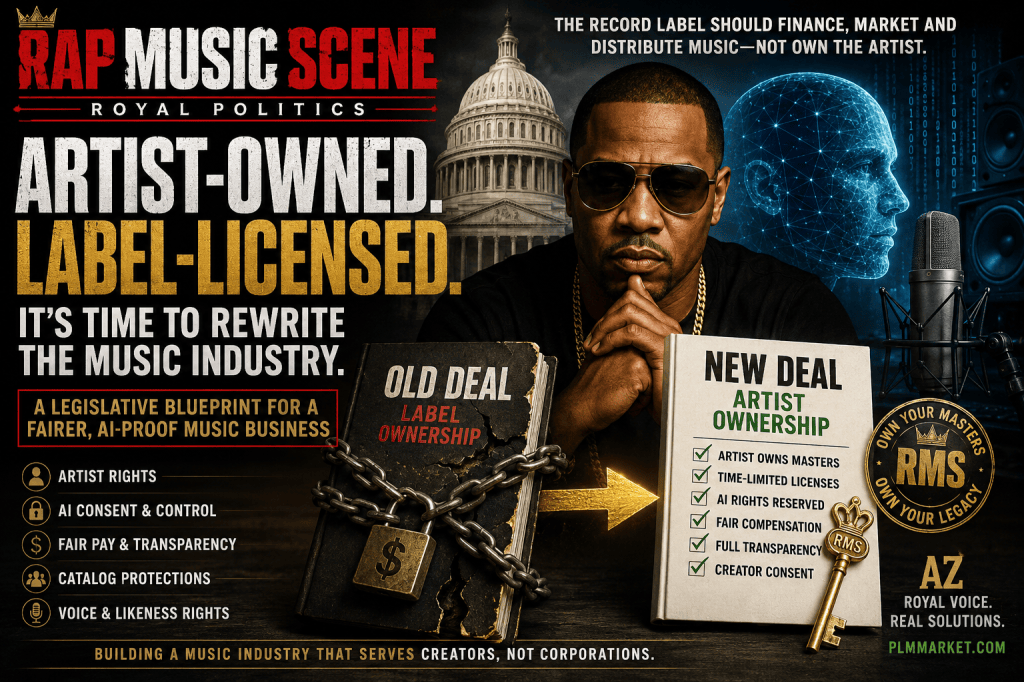
  • The record label should finance, market and distribute music—not permanently own the artist’s voice, masters, identity and future machine-generated output.

    Hip-Hop legend AZ recently described artificial intelligence as a system that has been feeding on artists’ “thoughts,” “stories,” “lyrics” and “legacy” without paying them. His response was not merely to complain. He joined PLMMarket as a founding partner and part-owner, supporting a model in which creators maintain identifiable, monetizable control over the knowledge placed into an AI system. PLMMarket describes its Professional Language Models as creator-authored knowledge bases through which experts can earn subscription, query and participation revenue. (AllHipHop)

    AZ’s move raises a larger political question:

    Who should possess the legal authority to approve, deny and profit from the use of an artist’s work in the AI economy?

    Under the traditional recording-industry structure, the answer may not be the artist. A record label, investment company or catalog purchaser may control the master recording even though the artist supplied the voice, performance, identity and cultural value.

    That arrangement was already unfair before generative AI. Now it is dangerous.

    A master is no longer valuable only because people can stream, purchase, sample or place the recording in a film. A catalog can potentially be analyzed, separated into stems, used to evaluate consumer behavior, licensed for machine learning, incorporated into a generative model or connected to a synthetic voice and digital replica.

    Congress should therefore establish a new legal foundation for the American music industry:

    The artist owns the master. The label receives a limited commercial license. AI rights remain with the creator unless separately and specifically authorized.

    That is the artist-owned, label-licensed model.


    The difference between creating music and controlling music

    Copyright law recognizes a musical composition and a sound recording as two separate works. The composition consists of the music and lyrics. The sound recording—commonly called the master—is the fixed recording of a particular performance. These two assets can be owned and licensed separately. (U.S. Copyright Office)

    The problem is that current law allows ownership rights to be transferred. It also recognizes works made for hire, under which the hiring or commissioning party may be treated as the legal author and copyright owner rather than the people who physically performed or produced the recording. (U.S. Copyright Office)

    The Copyright Office itself explains that performers and producers generally create sound recordings, but a record label can be named as the copyright claimant when it has acquired all the exclusive rights that initially belonged to the authors. (U.S. Copyright Office)

    That legal structure allows a person to spend years creating a culturally important body of work while another entity holds the ultimate authority over the resulting recordings.

    The public usually sees the artist.

    The law often sees the asset owner.

    AI makes that division impossible to ignore.


    Taylor Swift is the case study—not the exception

    Taylor Swift’s fight over her first six albums demonstrates why contractual bargaining alone cannot protect the average artist.

    Swift wrote in 2025 that she had spent approximately 20 years hoping for an opportunity to own her life’s work. She re-recorded four albums, mobilized one of the world’s most powerful fan bases and eventually generated enough leverage to purchase her original masters. Only then could she announce that all the music she had made belonged to her. (The Official Website of Taylor Swift)

    Her victory was extraordinary precisely because the necessary resources were extraordinary.

    Most rappers cannot finance the reconstruction of several albums. They cannot redirect billions of streams toward replacement recordings. They cannot generate the bargaining power of a worldwide stadium tour and then purchase a catalog valued in the hundreds of millions of dollars.

    The lesson should not be that every artist must become Taylor Swift before earning control over their own work.

    The lesson should be that the law placed ownership on the wrong side of the relationship from the beginning.

    Swift should not have needed to buy her musical life back. Neither should any other artist.


    Why AI changes the meaning of master ownership

    The U.S. Copyright Office says modern generative systems are developed using massive quantities of data that include copyrighted works. It recognizes the concern that artists’ complete bodies of work could be used against their wishes to produce new content that competes with them. (U.S. Copyright Office)

    The Office has also documented an emerging market for voluntary AI-training licenses, particularly in industries such as popular music where concentrated bodies of valuable content can be licensed in volume.

    That creates a serious structural problem.

    Suppose a label controls thousands of commercially successful master recordings. The label may be positioned to negotiate a catalog-wide AI agreement because it owns or controls the recordings.

    But the featured artists supplied the voices.

    Songwriters supplied the lyrics and compositions.

    Producers created the sonic architecture.

    Session musicians supplied performances.

    Fans supplied the listening behavior that revealed which creative patterns were most commercially effective.

    The corporation may nevertheless become the primary negotiating party.

    The master owner can potentially monetize the catalog again—not merely as recorded entertainment, but as machine-readable productive infrastructure.

    The catalog becomes a dataset.

    The dataset becomes a model.

    The model produces future commercial material.

    And the people who created the source material may be reduced to contractual royalty participants—or excluded entirely—depending on agreements they signed before modern generative AI existed.

    That cannot remain the default.


    The proposed Artist Ownership and Music Licensing Act

    Congress should enact an Artist Ownership and Music Licensing Act, establishing minimum national rights for recording artists, producers, musicians and songwriters.

    The legislation would not abolish record labels. It would redefine their role.

    Labels could still finance recording sessions, issue advances, build marketing campaigns, distribute albums, coordinate radio promotion, negotiate partnerships and assume commercial risk.

    What they could not do is convert temporary financial support into permanent ownership of an artist’s cultural output.

    1. Artists must initially own their masters

    Federal law should establish that the featured recording artist and qualifying human co-creators are the initial owners of a newly created sound recording.

    A label could obtain an exclusive license, but it could not obtain permanent copyright ownership merely through boilerplate language in a standard recording agreement.

    The work-made-for-hire doctrine should not apply to a featured artist’s recording unless the performer is a genuine salaried employee creating music within the ordinary scope of employment—not an independent artist signing a contract after developing a career, identity and audience.

    Congress has previously examined the impact of work-made-for-hire treatment on recording artists. The Copyright Office concluded that significant contributors to sound recordings should possess termination rights, while congressional testimony emphasized that termination exists partly to correct the unequal bargaining position of creators who cannot know a work’s future value when signing an initial agreement. (U.S. Copyright Office)

    The principle should be simple:

    Financing a recording does not make the financier its author.

    2. Labels should receive time-limited exclusive licenses

    The artist should license specified commercial rights to the label for a defined period.

    A standard term might be seven years from the initial commercial release, with any renewal requiring affirmative approval from the artist. California already limits enforcement of many personal-service agreements involving unique or extraordinary services to seven years, although that law does not itself establish master ownership. Congress could use the same general time horizon when constructing a federal recording-license framework. (Legislative Information)

    The license could cover:

    • commercial distribution;
    • streaming and physical sales;
    • ordinary promotion;
    • approved marketing partnerships;
    • specifically defined territories;
    • a clearly stated period.

    At expiration, the exclusive rights would automatically return to the artist without a lawsuit, termination notice or additional payment.

    There should be no perpetual license disguised through automatic extensions, unreasonably delayed delivery requirements or album-option clauses controlled solely by the label.

    3. The license must not become ownership through the back door

    The law should prohibit agreements that are called licenses but function as permanent transfers.

    A label should not be permitted to claim an exclusive license for the entire copyright term, renew the agreement unilaterally or hold the recording indefinitely because some portion of an advance remains unrecouped.

    Unrecouped expenses should remain financial obligations governed by the contract. They should not transform into permanent ownership of the artist’s master.

    When the license ends, the label’s control ends.

    4. AI rights must be legally separate from ordinary music rights

    A distribution license should not automatically include AI-training rights.

    Neither should a traditional clause covering technologies “now known or later developed.”

    Congress should establish AI use as a separate reserved right requiring a distinct written agreement.

    That agreement should separately address:

    • training and fine-tuning;
    • model evaluation and benchmarking;
    • stem extraction;
    • lyric and composition analysis;
    • voice modeling;
    • digital replicas;
    • style-conditioned generation;
    • synthetic performances;
    • generated remixes;
    • future music created from the model;
    • whether the model may be transferred or sublicensed;
    • what happens to the model when authorization expires.

    A label licensed to distribute an album on Spotify should not automatically have authority to turn the artist’s catalog into a music-generation engine.

    5. AI consent must be informed and specific

    California has already provided one useful legislative model. AB 2602 makes certain digital-replica provisions unenforceable when the contract lacks a reasonably specific description of the intended use and the individual was not properly represented during negotiations. (Legislative Information)

    Federal music legislation should go further.

    Consent should be invalid unless the agreement identifies:

    • the AI developer;
    • the model or system;
    • the exact recordings and data involved;
    • the intended commercial uses;
    • the length of the license;
    • the expected output categories;
    • compensation;
    • sublicensing rights;
    • deletion and model-retirement requirements;
    • whether the artist may revoke future uses.

    The artist should receive independent legal representation before granting digital-replica or AI-training rights.

    A signature buried inside a 100-page recording agreement should not qualify as meaningful consent.

    6. Voice and likeness rights must remain personal

    Owning a master recording should not mean owning the human being whose voice appears in it.

    Tennessee’s ELVIS Act expanded state protections covering unauthorized uses of an individual’s voice and likeness. Federal lawmakers also introduced the bipartisan NO FAKES Act in 2025 to create a national right addressing unauthorized digital replicas. (Tennessee State Government)

    Those protections should be incorporated into a larger artist-ownership framework.

    A label should never be able to argue:

    We own the recording, so we can build and operate a permanent simulation of the performer.

    A master license and a digital-identity license are different transactions.

    The artist’s identity should be nontransferable. Any commercial use of a synthetic voice, face or performance should require specific approval and continuing compensation.

    7. Creators must receive direct, nonrecoupable AI revenue

    Congress has already accepted direct statutory payments to performers as a legitimate music-industry mechanism. Under Section 114, 45 percent of certain statutory digital-performance receipts are paid to the featured recording artists rather than being routed entirely through the copyright owner. (U.S. Code)

    That principle should be extended to AI.

    At least 50 percent of gross revenue from an AI license involving music should be paid directly into a human-creator pool. That money should not be reduced by an artist’s unrelated recording advance, marketing debt or tour-support balance.

    Regulations could allocate the pool among:

    • featured performers;
    • songwriters and composers;
    • producers;
    • nonfeatured vocalists;
    • session musicians;
    • other documented human contributors.

    The remaining percentage would be negotiable among the master owner, publisher, label, AI developer and other participants.

    Under the artist-owned model, artists would also negotiate from the stronger position of controlling the underlying master.

    8. Artists must be able to approve placements and associations

    Ownership is not only about money. It is also about context.

    Artists should possess approval rights over uses involving:

    • political campaigns;
    • weapons;
    • gambling;
    • alcohol and nicotine;
    • military recruitment;
    • sexually explicit material;
    • synthetic collaborations;
    • advertising;
    • films and television;
    • games;
    • brand endorsements;
    • controversial AI products.

    A label may want the highest licensing fee available. The artist may reasonably decide that a particular use conflicts with their identity, beliefs, community or legacy.

    Under artist ownership, that decision belongs to the artist.

    9. Catalog licenses should not be freely sold without consent

    A label should not be able to sell an artist’s licensing agreement to private equity, an AI company or another record conglomerate without the creator’s knowledge.

    The legislation should provide:

    • advance notice of any proposed assignment;
    • a right of first refusal for the artist;
    • the right to reject assignments to AI developers or catalog funds;
    • automatic termination when an unauthorized assignment occurs;
    • disclosure of the proposed purchaser and transaction terms.

    Investors may purchase a label’s revenue interest. They should not automatically acquire personal authority over the artist’s identity, AI rights or approval rights.

    10. Recoupment must be transparent and limited

    The artist-owned model must also address accounting.

    Labels should be required to provide clear quarterly statements showing:

    • gross revenue by source;
    • platform and distributor deductions;
    • approved recording expenses;
    • marketing expenditures;
    • recouped and unrecouped balances;
    • licensing income;
    • foreign receipts;
    • reserves;
    • related-party charges;
    • AI-related revenue.

    Ordinary corporate overhead, executive salaries, unrelated legal expenses and internal markups should not be charged to an artist’s account unless specifically negotiated and reasonably connected to the project.

    Cross-collateralization—using one successful album, song or revenue stream to cover unrelated losses—should require express and separately initialed consent.

    Artists should have meaningful audit rights, with the label paying the audit costs when underpayment exceeds a defined threshold.

    11. Existing artists need stronger reversion rights

    Current federal termination rights generally cannot take effect until approximately 35 years after a grant, and works made for hire are excluded. (U.S. Copyright Office)

    Thirty-five years is far too long in a digital market.

    For future agreements, Congress should establish automatic reversion after no more than seven years.

    For existing catalogs, legislation should provide:

    • a new accelerated termination window;
    • a right of first refusal before a catalog sale;
    • immediate artist consent rights for AI training and digital replicas;
    • mandatory disclosure of all AI agreements;
    • the ability to terminate a grant when royalties or statements are materially withheld.

    Retroactive reform would have to respect constitutional and contractual limits, but Congress does not have to leave creators powerless merely because an old agreement never anticipated generative AI.

    At minimum, no existing master owner should be able to claim that a decades-old recording contract silently transferred rights to technologies and commercial uses that did not exist when the artist signed it.

    12. Enforcement must be realistic

    Rights without enforcement are publicity.

    The proposed law should authorize:

    • statutory damages;
    • recovery of profits;
    • attorneys’ fees;
    • injunctions;
    • model deletion orders;
    • dataset removal;
    • state attorney-general enforcement;
    • Federal Trade Commission enforcement;
    • a private right of action;
    • anti-retaliation protections;
    • personal liability for executives who knowingly conceal AI uses.

    The Copyright Office should maintain a searchable public registry of AI music licenses identifying the master owner, participating creators, AI developer, authorization period and permitted categories of use.

    Confidential financial terms could remain protected while the existence and basic scope of the license remain public.


    How the new model would work

    Consider a fictional independent rapper preparing a new album.

    Contract issueTraditional ownership modelArtist-owned, label-licensed model
    Master ownershipLabel may own the master indefinitelyArtist’s LLC owns the master from creation
    Label rightsBroad ownership or perpetual controlSeven-year exclusive commercial license
    AdvanceRecouped under label-controlled accountingRecoupment limited to documented, approved expenses
    Artist incomeMay begin only after recoupmentGuaranteed first-dollar, nonrecoupable payment
    AI trainingPotentially included in broad exploitation languageCompletely excluded unless separately authorized
    Voice clonePotential contractual ambiguitySeparate personal consent required
    Catalog saleLabel may sell controlled assetArtist notice, consent and first-refusal rights
    License expirationOwnership may remain with labelRights return automatically to artist
    Future exploitationLabel continues monetizing catalogArtist chooses a new label, distributor or direct model

    A sample deal could operate as follows:

    The artist’s company owns the master. A label provides a $500,000 recording and marketing commitment. In exchange, the label receives a seven-year exclusive worldwide distribution and marketing license.

    The artist receives a minimum percentage from the first dollar, regardless of recoupment. The label recovers only documented, contractually approved costs. After recoupment, the parties divide revenue according to their negotiated percentages.

    The artist retains approval over synchronization, political use, advertising, sampling, catalog assignment and synthetic performances.

    AI rights are not part of the original agreement.

    Should an AI developer later offer $10 million to train a model on the album, the artist decides whether the proposal is accepted. Songwriters, producers and performers receive direct compensation. The model’s permitted uses, duration and deletion obligations are written into a separate agreement.

    When the seven-year label license expires, the artist remains the owner.

    The label has been compensated for its investment and services. The artist retains the permanent asset.

    That is a legitimate partnership.


    This model does not eliminate labels

    Record companies will argue that ownership compensates them for risk.

    But investment does not automatically require permanent copyright ownership.

    A lender can receive repayment.

    An investor can receive profit participation.

    A distributor can receive a fee.

    A marketing partner can receive a revenue percentage.

    A label can receive an exclusive license and priority recoupment.

    None of those arrangements require the company to own the artist’s master for the entire copyright term.

    Labels that genuinely create value would remain valuable. They would compete for licenses by offering better financing, marketing, strategy, transparency and international reach.

    Labels that depend primarily on capturing permanent ownership from inexperienced creators would face pressure to change.

    That is precisely the point.


    Why this matters most to Hip-Hop

    Hip-Hop has generated enormous economic value while repeatedly teaching artists that ownership is something to pursue only after becoming successful.

    That sequence is backward.

    Artists are often asked to surrender ownership before anyone knows how valuable the music will become. If the record fails, the company writes it off. If the record becomes culturally historic, the company owns a long-term asset whose value may continue growing for generations.

    AI raises the stakes because the company may no longer be monetizing only the old song.

    It may be monetizing what can be extracted from the song:

    • the voice;
    • flow patterns;
    • lyrical structures;
    • production techniques;
    • audience data;
    • emotional categories;
    • stylistic relationships;
    • synthetic derivatives;
    • future machine-generated recordings.

    Hip-Hop artists should not become raw material for automated replacements controlled by the same institutions that already control their masters.


    Congress must decide who the music economy is built to serve

    The old record contract treated the artist as a temporary source of labor and the master as a permanent corporate asset.

    The AI economy can make that imbalance worse. A company that controls a catalog may seek to control not only the recordings that already exist, but also the synthetic output that can be derived from them.

    Legislation must establish a different order:

    The human creator is the principal.
    The label is the commercial partner.
    The master remains with the artist.
    AI use requires separate consent.
    Revenue follows the people whose work powers the system.

    AZ’s creator-ownership move points toward the correct principle: people should not have to surrender their knowledge, work or identity in exchange for access to technology.

    The music industry should operate the same way.

    Labels should not own artists.

    Labels should not own voices.

    Labels should not control digital replicas.

    And labels should not permanently possess the cultural property artists create simply because they financed one stage of its commercial release.

    The future should be artist-owned and label-licensed.

    Anything less allows the music industry to turn human legacies into corporate training data—and call it innovation.

  • When people turn awareness into an insult, the culture must become even more conscious, strategic and truthful.

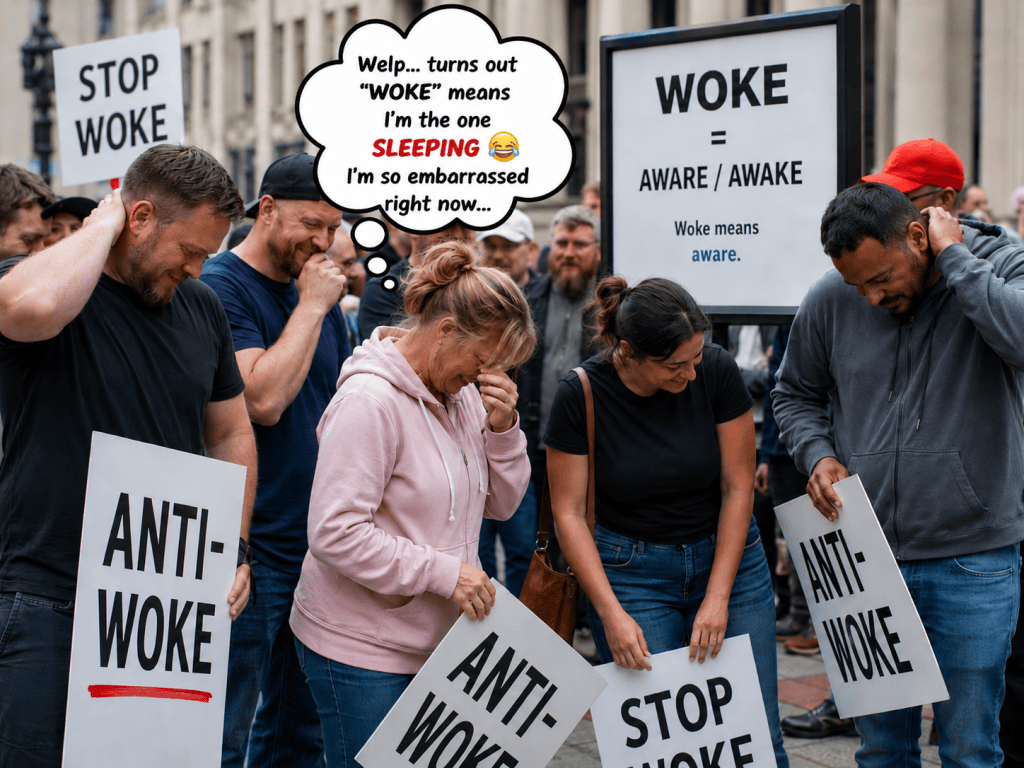
    The greatest irony of the anti-woke movement is hidden inside the insult itself.

    To be woke means to be awake.

    It means to be aware of what is happening around you, conscious of danger, attentive to patterns and unwilling to move through the world with your eyes closed.

    So when politicians, commentators and their loyal henchmen proudly declare war on “wokeness,” they are telling the public exactly what they want:

    Stop looking.

    Stop questioning.

    Stop recognizing patterns.

    Stop examining who owns what.

    Stop asking who benefits.

    Stop studying how power works.

    Go back to sleep.

    Hip-hop cannot afford to accept that invitation.

    Not now.

    The culture is moving through an age of artificial intelligence, disappearing diversity programs, weakened affirmative-action structures, concentrated media ownership, algorithmic control and growing political hostility toward honest discussions of race, inequality and power.

    This is not the moment for rap to become less aware.

    This is the moment for rap to become more disciplined, more truthful and more strategic.

    Rap the Authentic Lyrics

    Hip-hop does not need permission to tell the truth.

    Artists should rap what they actually see, know and experience.

    That means telling the truth about poverty, policing, ownership, violence, family, education, addiction, ambition, exploitation, spirituality, business and survival.

    It also means resisting the pressure to manufacture a false image simply because an algorithm rewards it.

    Authentic lyrics do not have to sound like lectures.

    Truth can be aggressive.

    Truth can be funny.

    Truth can be luxurious.

    Truth can be street.

    Truth can be personal.

    Truth can be political without mentioning a politician.

    The responsibility is not to make every record educational. The responsibility is to avoid becoming a tool of confusion.

    An artist should ask whether the music reflects reality or merely repeats a profitable stereotype.

    Does the record tell the audience something honest?

    Does it reveal a contradiction?

    Does it document a real condition?

    Does it preserve the language, emotion and experience of the people who created the culture?

    Or does it simply feed destructive images into systems owned by people who do not have to live with the consequences?

    Authenticity is not about pretending every rapper must be morally perfect.

    It is about refusing to let outsiders define Black reality through the most commercially useful fragments of it.

    Tell the Truth, Even When It Is Uncomfortable

    Awareness requires honesty in every direction.

    Hip-hop should tell the truth about racism, exclusion and unequal power.

    It should also tell the truth about violence within the community, poor leadership, self-destruction, exploitation between artists, broken business practices and the glorification of behavior that damages the same people the culture claims to represent.

    Being awake does not mean protecting every comfortable narrative.

    It means being willing to see clearly.

    The culture cannot criticize outside systems while refusing to examine its own.

    Record labels should be questioned.

    Streaming platforms should be questioned.

    Media companies should be questioned.

    Managers, promoters and distributors should be questioned.

    Artists should also question themselves.

    Who owns the masters?

    Who owns the platform?

    Who controls the audience data?

    Who receives the largest share of the revenue?

    Who can remove the music?

    Who can change the algorithm?

    Who can terminate the partnership?

    Who owns the building where the event happens?

    Who controls the publication covering the culture?

    Who benefits from the image being promoted?

    Truth becomes strategy when it leads to better decisions.

    Educate Your People

    Hip-hop has always taught.

    It teaches language, fashion, geography, ambition, identity and social behavior, whether artists intend it or not.

    The only question is what the culture will teach.

    Artists do not need to become professors, but they should understand the influence they hold.

    A single lyric can introduce a young listener to ownership, history, politics, investing, technology, health, discipline or strategy.

    A podcast can explain how contracts work.

    A music video can show something other than consumption.

    An interview can discuss publishing, trademarks, touring, taxes, real estate, local government or artificial intelligence.

    A platform can introduce its audience to people building institutions instead of only people seeking attention.

    Education does not weaken entertainment.

    It gives entertainment depth.

    The culture should normalize conversations about intellectual property, business formation, credit, local politics, public contracts, coding, artificial intelligence, media ownership and long-term planning.

    Young people should know the difference between being visible and being powerful.

    They should know the difference between income and ownership.

    They should know the difference between celebrity and authority.

    They should know the difference between representation and control.

    If hip-hop does not educate its audience, someone else will—and that education may be designed to make the audience easier to manipulate.

    Think Strategically

    Awareness without strategy becomes frustration.

    It is not enough to recognize that a system is unfair.

    The next question is what can be built.

    Artists should think beyond releases.

    Build catalogs.

    Build brands.

    Build publishing companies.

    Build media outlets.

    Build touring infrastructure.

    Build direct relationships with supporters.

    Build archives.

    Build technology.

    Build spaces where the culture can gather without depending entirely on outside approval.

    Study contracts before signing them.

    Study ownership before celebrating partnerships.

    Study the history of a company before becoming its public face.

    Study the incentives behind platforms that claim to empower creators.

    Study politics beyond presidential elections.

    Learn who controls zoning, grants, licensing, school boards, local budgets, cultural funding and public contracts.

    Power often operates far below the level of national television.

    Strategic awareness means understanding the machinery.

    A culture that only reacts to headlines will always be late.

    A culture that studies structure can prepare before the crisis arrives.

    Do Not Let Algorithms Put the Culture to Sleep

    Artificial intelligence and recommendation systems now shape what millions of people hear, see and believe.

    The public is increasingly guided by systems it does not understand and cannot inspect.

    That makes awareness even more important.

    Artists must understand that algorithms are not passive.

    They reward certain behaviors.

    They amplify certain emotions.

    They encourage repetition.

    They can make a narrow image of hip-hop appear universal because that image generates engagement.

    They can train artists to chase visibility instead of building value.

    They can train audiences to confuse frequency with truth.

    The culture must use technology without allowing technology to define the culture.

    Learn how the systems work.

    Study data.

    Understand distribution.

    Use artificial intelligence as a tool, not as a replacement for identity, judgment or original thought.

    Do not hand your voice, likeness, catalog or creative process to a platform without understanding the long-term consequences.

    In the AI era, staying awake means protecting not only your ideas, but the data and systems surrounding them.

    Reject Performative Sleep

    Some people will use anti-woke language because it is profitable.

    They will mock awareness to gain applause from audiences that reward resentment.

    They will present ignorance as courage and cruelty as honesty.

    They will call any discussion of structure an excuse.

    They will call any historical knowledge victimhood.

    They will call any attempt to organize identity politics, even while organizing their own political base around identity, fear and grievance.

    Hip-hop should recognize the performance.

    The goal is not always to win an argument.

    Sometimes the goal is to make people ashamed of noticing what is happening.

    That is why the culture must refuse performative sleep.

    Do not pretend not to see racism because someone may call you woke.

    Do not pretend ownership does not matter because someone may call you divisive.

    Do not hide your intelligence to make others comfortable.

    Do not dilute the truth to gain temporary acceptance from institutions that profit from the culture while resisting its independence.

    Awareness is not weakness.

    Awareness is preparation.

    Build Beyond DEI

    The decline of affirmative action and corporate DEI should teach the culture an important lesson.

    Programs controlled by outside institutions can be changed, weakened or eliminated.

    That does not mean those programs never mattered.

    It means they were never enough.

    Hip-hop must think beyond inclusion.

    The goal cannot only be a seat at someone else’s table.

    The culture needs tables, buildings, platforms, funds, schools, studios, media companies, technology systems and political organizations of its own.

    Representation matters, but ownership determines what survives.

    A diverse executive team inside a company owned elsewhere is not the same as institutional control.

    A cultural partnership is not the same as equity.

    A brand campaign is not the same as infrastructure.

    The strategic response to the non-DEI era is not despair.

    It is construction.

    Build what cannot be withdrawn by a change in corporate policy.

    Own what cannot be canceled by a new administration.

    Develop knowledge that cannot be erased by changing a slogan.

    Stay Awake

    Hip-hop should hear the phrase “anti-woke” for what it truly is.

    It is an invitation to become less observant.

    Less informed.

    Less historical.

    Less strategic.

    Less capable of identifying power.

    The culture should reject that invitation completely.

    Rap the authentic lyrics.

    Tell the truth.

    Educate your people.

    Study the system.

    Protect the intellectual property.

    Understand the technology.

    Build independent infrastructure.

    Think further ahead than the next release, trend or election.

    Staying awake does not mean agreeing with every political movement or defending every policy placed under the banner of progress.

    It means maintaining the ability to think for yourself.

    That is the real threat awareness poses.

    An awake artist cannot be easily programmed.

    An awake audience cannot be easily manipulated.

    An awake culture cannot be permanently controlled by people who only understand its commercial value.

    Let the anti-woke crowd celebrate sleep.

    Hip-hop has work to do.

    Stay awake. Stay authentic. Stay strategic.

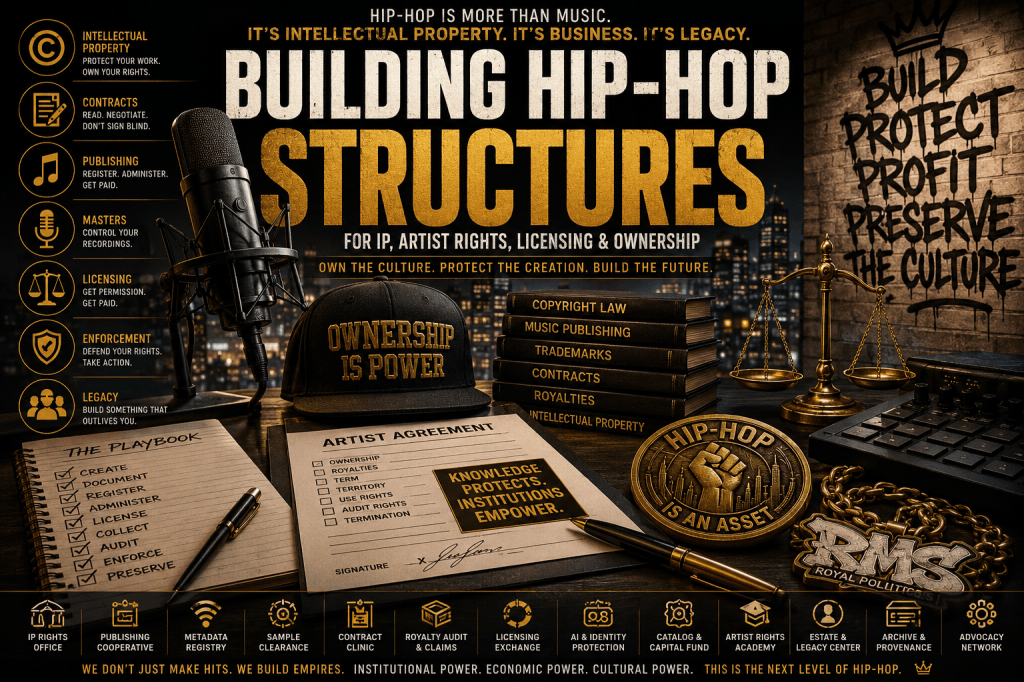
  • Hip-hop has already proven that it can create global culture. The next stage is building the institutions that protect, administer and expand the value created by that culture.

    Hip-hop does not suffer from a shortage of talent.

    It does not lack influential artists, producers, writers, engineers, photographers, designers, filmmakers, managers or entrepreneurs. It has repeatedly transformed music, language, fashion, advertising, technology and popular culture.

    The structural weakness appears after the creation occurs.

    Who documents the ownership?

    Who registers the rights?

    Who reviews the contract?

    Who administers the publishing?

    Who clears the sample?

    Who collects the royalties?

    Who monitors the license?

    Who audits the distributor?

    Who protects the artist’s name, voice and likeness?

    Who preserves the catalog when the artist dies?

    Who negotiates with technology companies when a new platform begins extracting value from hip-hop?

    For too long, the culture has produced intellectual property faster than it has built institutions capable of protecting and administering that intellectual property.

    The next stage of hip-hop development must therefore move beyond encouraging artists to “learn the business.”

    Individual education is necessary, but an industry cannot depend on every young artist independently becoming a copyright attorney, accountant, metadata specialist, publishing administrator, licensing executive and estate planner.

    Hip-hop needs infrastructure.


    Popularity Is Not Ownership

    One of the music industry’s greatest illusions is the idea that visibility automatically produces power.

    An artist can have:

    • millions of streams;
    • viral records;
    • major media attention;
    • influential style;
    • recognizable lyrics;
    • cultural credibility;
    • and a large audience;

    while possessing limited control over the underlying intellectual property.

    Fame measures public recognition.

    Ownership determines who controls the asset.

    Administration determines whether the owner is identified and paid.

    Licensing determines how the asset may be used.

    Accounting determines whether the money reaches the correct party.

    Enforcement determines whether those rights mean anything when challenged.

    A serious hip-hop infrastructure must connect all of these functions.


    Understanding the Two Core Music Copyrights

    A commercially released song commonly involves at least two distinct copyrighted works:

    1. The musical work, meaning the composition—the underlying music and lyrics.
    2. The sound recording, meaning the particular recorded performance of that composition.

    The songwriter or publisher may control the composition, while an artist, independent label or record company may control the sound recording. In some cases, the same person or company owns both. In others, ownership is divided among multiple parties. (U.S. Copyright Office)

    This distinction affects nearly every part of the music business.

    A film producer seeking to use a released song may need permission involving both the composition and the master recording. A songwriter may be owed one category of royalties while the sound-recording owner is owed another. An artist who performed a record may not own either underlying copyright unless the governing agreements say otherwise.

    That is why saying, “I made the song,” is not a complete rights analysis.

    The important questions are:

    • Who wrote the composition?
    • Who owns each writer’s share?
    • Who administers those shares?
    • Who financed and owns the master?
    • Was the recording created as a work made for hire?
    • Were any samples or interpolations used?
    • What rights were assigned or licensed?
    • Which companies are authorized to collect the resulting revenue?

    Hip-hop must build institutions capable of answering these questions before disputes begin.


    1. The Hip-Hop Intellectual Property Rights Office

    The Hip-Hop Intellectual Property Rights Office would serve as a central educational and administrative institution for creators and independent companies.

    Its purpose would be to help artists understand, document and protect the assets they create.

    Core Functions

    The office could provide structured guidance involving:

    • copyright ownership;
    • trademark protection;
    • publishing rights;
    • master ownership;
    • producer agreements;
    • featured-artist agreements;
    • split sheets;
    • work-for-hire provisions;
    • licensing;
    • merchandising;
    • name, image and likeness rights;
    • digital replicas;
    • and catalog succession.

    It would not replace individualized legal representation. Instead, it would create an accessible first layer of institutional knowledge, documentation and professional referral.

    Rights Inventory

    Every participating artist or company should be able to build a private rights inventory containing:

    • legal names and professional names;
    • company ownership information;
    • song titles;
    • alternative titles;
    • writers and ownership percentages;
    • producer credits;
    • performing artists;
    • master owners;
    • publishers and administrators;
    • registration numbers;
    • unique recording and composition identifiers;
    • distribution agreements;
    • licenses;
    • sample-clearance documentation;
    • artwork rights;
    • video rights;
    • trademarks;
    • and royalty accounts.

    This inventory would function as the artist’s intellectual-property ledger.

    The goal is simple:

    Every asset should have an identifiable owner, supporting documentation and an administration path.


    2. The Hip-Hop Publishing Administration Cooperative

    Many artists understand that publishing matters without fully understanding what publishing administration requires.

    A publishing administration cooperative could help independent writers and producers properly register works, maintain ownership data, issue licenses, monitor usage and collect eligible revenue.

    Why Administration Matters

    Owning a percentage of a song does not automatically guarantee that every relevant organization has accurate information about that ownership.

    Composition information may need to be submitted to several institutions depending on the rights and uses involved. The Mechanical Licensing Collective administers the United States blanket mechanical license for eligible interactive streaming and download services. Digital service providers operating under that license send usage data and royalties to The MLC, which then distributes eligible royalties to registered and identified rightsholders. (themlc.com)

    A writer may also need relationships with a performing-rights organization, a publishing administrator or other collection entities depending on territory and revenue type.

    The cooperative could help creators understand that:

    • copyright registration is not the same as royalty registration;
    • a performing-rights organization does not necessarily collect every category of music revenue;
    • a distributor does not automatically administer publishing;
    • and a record label’s accounting does not necessarily cover money owed directly to songwriters or performers by other organizations.

    Cooperative Services

    The organization could provide:

    • composition registration;
    • split confirmation;
    • conflict identification;
    • publisher account administration;
    • royalty statement review;
    • international collection coordination;
    • catalog reconciliation;
    • ownership-change processing;
    • and unmatched-work research.

    Its purpose would not be to seize publishing from artists.

    Its purpose would be to help artists retain publishing while gaining the professional administration required to make ownership functional.


    3. The Master Ownership and Metadata Registry

    Hip-hop needs a trusted system for preserving information about sound recordings.

    Every completed recording should be connected to verified information about:

    • the featured artist;
    • nonfeatured performers;
    • producer;
    • executive producer;
    • sound-recording owner;
    • label;
    • distributor;
    • recording date;
    • release date;
    • territory;
    • unique recording identifier;
    • samples;
    • featured appearances;
    • producer points;
    • and royalty instructions.

    Metadata Is Economic Infrastructure

    Metadata may appear technical, but it is directly connected to attribution, discovery, licensing and payment.

    A record can travel across streaming services, social platforms, radio systems, games, films and international markets. When ownership and contributor data are missing or inconsistent, the people who created the asset may become harder to identify and pay.

    The registry would not replace official registration or collection systems. It would provide an independent internal record that creators could use to verify what outside platforms and companies report.

    A Hip-Hop Credits Standard

    The registry could establish a culture-wide credits standard requiring releases to document:

    • all writers;
    • producers and coproducers;
    • engineers;
    • mixers;
    • featured and supporting performers;
    • musicians;
    • sample sources;
    • artwork creators;
    • video directors;
    • and ownership entities.

    Hip-hop should not accept a digital marketplace where the song is globally available but the people who made it remain invisible.

    Credits are not merely ceremonial.

    Credits are ownership evidence, career history and economic data.


    4. The Sample Clearance and Licensing Center

    Sampling is one of hip-hop’s foundational creative technologies.

    It is also one of its most complicated rights environments.

    A Hip-Hop Sample Clearance and Licensing Center could help artists, producers, labels and legacy rightsholders identify sampled works, locate relevant owners, negotiate permissions and document approved uses.

    Core Services

    The center could assist with:

    • sample identification;
    • composition ownership research;
    • master ownership research;
    • interpolation analysis;
    • clearance requests;
    • fee and royalty negotiations;
    • limited-use licenses;
    • archival documentation;
    • and replacement strategies when clearance cannot be obtained.

    The center could also build relationships with legacy artists, estates, publishers and labels to create more predictable pathways for licensing older music.

    From Conflict to Marketplace

    Instead of treating every sample as the beginning of a lawsuit, hip-hop could build a marketplace where creators and rightsholders can find one another earlier.

    A structured system could allow rightsholders to establish:

    • preferred licensing terms;
    • works available for sampling;
    • restricted works;
    • standard information requirements;
    • review procedures;
    • and contact channels.

    Not every sample can or should receive automatic approval. But the process should not remain unnecessarily inaccessible, slow or dependent on private industry relationships.

    Sampling created enormous cultural value.

    Hip-hop should build the infrastructure through which that value can be lawfully shared.


    5. The Artist Contract and Rights Clinic

    Many damaging music agreements are signed when the artist has the least leverage, the least information and the greatest urgency.

    The Artist Contract and Rights Clinic would provide independent education and access to qualified attorneys before creators sign agreements.

    Agreements Requiring Review

    The clinic could address:

    • recording contracts;
    • distribution agreements;
    • producer agreements;
    • management agreements;
    • publishing agreements;
    • administration agreements;
    • featured-artist releases;
    • work-for-hire contracts;
    • beat licenses;
    • merchandising agreements;
    • brand partnerships;
    • sponsorships;
    • synchronization licenses;
    • touring agreements;
    • and catalog-sale agreements.

    The Structural Questions

    Rather than focusing only on the advance, the clinic would teach artists to examine:

    • the length of the agreement;
    • options and renewal rights;
    • ownership;
    • exclusivity;
    • accounting;
    • recoupment;
    • controlled-composition provisions;
    • royalty definitions;
    • cross-collateralization;
    • audit rights;
    • approval rights;
    • termination;
    • name and likeness rights;
    • re-recording restrictions;
    • artificial-intelligence provisions;
    • and dispute procedures.

    An advance is not the full value of an agreement.

    It may be a payment against future earnings, a transfer of risk, a method of securing control or a combination of all three.

    Artists need advisers who can explain what the company receives—not only what the artist receives on signing day.


    6. The Hip-Hop Royalty Audit and Claims Unit

    An ownership system without accounting and enforcement is incomplete.

    The Royalty Audit and Claims Unit would help creators determine whether usage information, ownership records and payments are accurate.

    Revenue Areas

    The unit could review:

    • distributor statements;
    • label royalties;
    • producer royalties;
    • publishing income;
    • mechanical royalties;
    • performance royalties;
    • neighboring rights;
    • synchronization payments;
    • merchandise participation;
    • social-platform revenue;
    • user-generated-content claims;
    • and international collections.

    SoundExchange administers United States statutory digital-performance royalties for sound recordings used by eligible noninteractive digital services, including services such as Pandora and SiriusXM. Featured artists and sound-recording owners generally must register and claim their recordings to receive applicable payments. (SoundExchange)

    That is one example of why artists need a revenue map. Different organizations administer different rights, and one registration does not automatically activate every possible payment stream.

    Claims and Reconciliation

    The unit could help resolve:

    • missing recordings;
    • conflicting ownership claims;
    • incorrect writer shares;
    • duplicate registrations;
    • unpaid producer royalties;
    • unidentified works;
    • unclaimed accounts;
    • and inconsistent statements.

    It could also develop independent auditing capacity for artists whose agreements provide audit rights.

    The objective is not to encourage baseless accusations.

    The objective is to ensure that contractual and statutory rights can be verified.


    7. The Hip-Hop Licensing Exchange

    Hip-hop intellectual property should not become valuable only when an outside advertising agency, film studio or technology company decides to use it.

    The culture needs its own licensing infrastructure.

    The Hip-Hop Licensing Exchange could connect verified rightsholders with legitimate opportunities in:

    • film;
    • television;
    • advertising;
    • video games;
    • sports;
    • documentaries;
    • trailers;
    • fashion;
    • museums;
    • podcasts;
    • educational media;
    • public exhibitions;
    • and digital platforms.

    A Searchable Licensing Catalog

    Rightsholders could identify works according to:

    • genre;
    • era;
    • mood;
    • lyrical themes;
    • tempo;
    • instrumental availability;
    • clean versions;
    • ownership status;
    • sample status;
    • territory;
    • and licensing contact.

    The exchange would prioritize tracks with documented composition and master ownership so that potential licensees can obtain responses efficiently.

    Negotiating Beyond Exposure

    Licensing discussions should examine:

    • term;
    • territory;
    • media;
    • exclusivity;
    • editing rights;
    • context;
    • promotional use;
    • artificial-intelligence use;
    • archival use;
    • renewal;
    • and fee structure.

    Exposure is not a substitute for permission or compensation.

    A licensing institution would give independent creators a professional route into markets that are often controlled by private networks.


    8. The Name, Image, Voice and Digital Replica Protection Lab

    Artificial intelligence has made the protection of identity a central artist-rights issue.

    An artist’s voice, appearance, performance style and public identity can now be imitated at scale. Unauthorized digital replicas may confuse audiences, interfere with legitimate releases and extract commercial value from the reputation an artist spent years building.

    The U.S. Copyright Office has examined digital replicas separately from traditional copyright and recommended federal legislation addressing unauthorized replicas that realistically but falsely depict individuals. Its AI reports also distinguish questions involving digital identity from the copyrightability of AI-generated output. (U.S. Copyright Office)

    Lab Functions

    The lab could develop:

    • identity-rights education;
    • voice and likeness licensing standards;
    • AI contract language;
    • digital-replica monitoring;
    • evidence-preservation procedures;
    • takedown and dispute support;
    • authorized model-training licenses;
    • and public verification tools.

    Consent Must Be Specific

    Artists should not accept vague contract language allowing a company to use their identity through any technology, forever, for any purpose.

    Agreements involving AI or digital replicas should examine:

    • what data may be used;
    • who may use it;
    • the permitted purpose;
    • whether model training is authorized;
    • how long permission lasts;
    • whether sublicensing is allowed;
    • whether the artist can approve the output;
    • how the artist is paid;
    • and what happens after termination or death.

    Hip-hop should not wait until digital replicas become routine before creating standards.


    9. The Independent Catalog and Community Capital Fund

    Ownership cannot be protected if artists are repeatedly forced to sell valuable rights during periods of financial pressure.

    A Hip-Hop Catalog and Community Capital Fund could provide lawful financing alternatives for artists, producers, labels and estates.

    Possible Functions

    The fund could support:

    • recording budgets;
    • marketing;
    • touring infrastructure;
    • catalog administration;
    • litigation costs;
    • royalty advances;
    • estate stabilization;
    • rights reacquisition;
    • and independent company growth.

    The purpose would not be to eliminate outside investment.

    It would be to increase the number of financing options available so that creators are not forced to exchange permanent ownership for short-term survival.

    Investment Discipline

    Any community capital structure would require:

    • securities compliance;
    • independent valuation;
    • professional underwriting;
    • transparent fees;
    • conflict-of-interest rules;
    • audited financial reporting;
    • risk disclosure;
    • and qualified management.

    Calling capital “community owned” does not remove the need for financial discipline.

    The institution must protect both the artist receiving capital and the people whose money supports the fund.


    10. The Hip-Hop Artist Rights Academy

    The industry often tells artists to read their contracts after presenting them with documents filled with specialized language, compressed deadlines and unequal bargaining power.

    The Artist Rights Academy would teach music-business knowledge before the contract arrives.

    Core Curriculum

    The academy could offer training in:

    • copyright;
    • trademarks;
    • publishing;
    • master ownership;
    • royalty systems;
    • contracts;
    • licensing;
    • sampling;
    • distribution;
    • accounting;
    • taxes;
    • business formation;
    • insurance;
    • catalog valuation;
    • estate planning;
    • artificial intelligence;
    • and data management.

    Different Training Paths

    Separate courses could be designed for:

    • recording artists;
    • songwriters;
    • producers;
    • managers;
    • independent labels;
    • engineers;
    • DJs;
    • photographers;
    • filmmakers;
    • and heirs managing artist estates.

    The academy should use actual documents, simulations and rights-mapping exercises rather than only motivational lectures.

    A student might be required to:

    • complete a split sheet;
    • identify both copyrights in a song;
    • read a royalty statement;
    • prepare a master metadata sheet;
    • evaluate a beat license;
    • trace a digital royalty;
    • and identify problematic language in a hypothetical agreement.

    The purpose is not to turn every artist into an attorney.

    It is to ensure that artists know when they need one.


    11. The Hip-Hop Estate and Legacy Center

    Many catalogs become disorganized after an artist dies or becomes incapacitated.

    Family members may inherit valuable rights without receiving the records, passwords, contracts or professional guidance necessary to administer them.

    The Hip-Hop Estate and Legacy Center would help creators prepare before a crisis.

    Legacy Planning

    The center could help artists organize:

    • wills and trusts;
    • business succession;
    • copyright ownership;
    • publishing interests;
    • master rights;
    • trademarks;
    • unreleased music;
    • royalty accounts;
    • social accounts;
    • domain names;
    • physical archives;
    • passwords;
    • licensing instructions;
    • and authorized representatives.

    Estate Support

    The center could also assist heirs with:

    • ownership verification;
    • probate-related referrals;
    • royalty registration;
    • licensing inquiries;
    • catalog preservation;
    • counterfeit merchandise;
    • unauthorized releases;
    • documentary requests;
    • and archival partnerships.

    Hip-hop has lost too many artists for legacy planning to remain an afterthought.

    The culture must protect not only active careers, but the families and institutions that survive them.


    12. The Hip-Hop Archive and Provenance Center

    Hip-hop history is intellectual property.

    Original recordings, notebooks, flyers, photographs, clothing, equipment, contracts, videos, websites and oral histories possess cultural and economic value.

    Yet these materials are often discarded, scattered or acquired by outside institutions after the people closest to the culture fail to preserve them.

    The Archive and Provenance Center would document:

    • who created an object;
    • who owns it;
    • when it was created;
    • where it appeared;
    • how it was acquired;
    • and what rights accompany it.

    Preservation and Control

    The center could establish:

    • digital archives;
    • physical storage standards;
    • oral-history programs;
    • artist collections;
    • regional hip-hop histories;
    • exhibition licensing;
    • research access;
    • and provenance records.

    Preservation should not mean surrendering ownership.

    Artists and families should be able to preserve materials while retaining clear control over reproduction, exhibition, publication and commercial licensing.


    13. The Hip-Hop Rights Advocacy Network

    Individual creators often negotiate against companies with legal departments, lobbying operations, data systems and long-term institutional memory.

    Hip-hop needs coordinated public-policy advocacy around the rights of artists, songwriters, producers and independent companies.

    The network could study and advocate on issues involving:

    • music licensing;
    • digital royalties;
    • contract transparency;
    • artist recoupment;
    • copyright termination;
    • artificial intelligence;
    • digital replicas;
    • platform accountability;
    • data access;
    • ticketing;
    • radio performance rights;
    • bankruptcy;
    • estate rights;
    • and independent-business development.

    The network should not pretend that every artist and company will share identical interests.

    Songwriters, performers, producers, labels, publishers, distributors and platforms may have competing positions.

    A credible advocacy institution would identify those differences openly while developing areas of shared interest.


    The Complete Hip-Hop Rights Pipeline

    These institutions should operate as one connected system:

    Creation → Documentation → Split Confirmation → Copyright Registration → Metadata Registration → Release → Royalty Collection → Accounting → Audit → Licensing → Enforcement → Catalog Finance → Estate Administration → Cultural Preservation

    Every stage protects the next.

    A missing split sheet can become an ownership dispute.

    An ownership dispute can delay registration.

    Incomplete registration can interfere with royalty collection.

    Unclear ownership can destroy a licensing opportunity.

    Poor accounting can hide the value of a catalog.

    Weak estate planning can leave the catalog vulnerable after death.

    The industry often treats these as separate problems.

    Structurally, they are one system.


    What Artists Can Do Now

    Artists should not wait for the complete infrastructure to exist before becoming more organized.

    Every independent creator can begin by establishing a basic rights file containing:

    • signed split sheets;
    • producer and feature agreements;
    • master ownership documents;
    • copyright records;
    • publishing registrations;
    • royalty accounts;
    • distributor agreements;
    • sample licenses;
    • metadata;
    • trademarks;
    • artwork and video permissions;
    • tax and business records;
    • and estate instructions.

    The file should be backed up, securely stored and accessible to an authorized person in an emergency.

    Creators should also avoid signing documents they do not understand merely because an opportunity appears urgent.

    Urgency is frequently where leverage disappears.


    Hip-Hop Must Become an Institutional Culture

    Hip-hop has mastered cultural production.

    It knows how to make a record travel from one room to the entire world. It knows how to create language that becomes advertising copy, fashion that becomes a global trend and local experience that becomes international entertainment.

    But cultural influence without institutional ownership leaves the culture dependent on the companies that administer what hip-hop creates.

    The objective is not to isolate hip-hop from the larger music industry.

    The objective is to ensure that hip-hop enters that industry with its own:

    • rights offices;
    • legal networks;
    • registries;
    • licensing systems;
    • educational institutions;
    • capital structures;
    • archives;
    • data;
    • and negotiating capacity.

    Artists should not have to surrender ownership to obtain administration.

    Producers should not have to disappear from the credits after shaping the sound.

    Families should not have to search for rights after an artist dies.

    Independent labels should not have to operate without reliable legal and accounting infrastructure.

    And the culture should not wait for outside institutions to decide which parts of hip-hop history are worth preserving.

    The music was the beginning.

    The catalog is the asset.

    The institution is how the asset survives.

    Hip-Hop Created the Culture. Now It Must Build the Structure.


  • Some rappers still want to sign a record deal, and there is nothing automatically wrong with that. A label deal can still be useful if it brings funding, distribution, marketing support, industry relationships, infrastructure, or global reach.

    The problem is wanting a deal without a plan.

    Too many artists wait for the label to move first. They wait for the meeting, the advance, the rollout, the budget, the co-sign, or the validation. But if an artist is serious about signing, the smartest move is to prepare before anyone sends an offer.

    A record deal should enter into a business plan.

    It should not replace one.

    The Artist Needs to Know the Business Before Negotiating the Deal

    Before a rapper signs anything, they need to understand what they are building. That means thinking beyond songs, videos, and social media posts. Music may be the product, but the artist is also building a business identity.

    A label is going to look at the artist as an asset. The artist needs to look at themselves as an owner.

    That begins with a business plan.

    A business plan does not have to be complicated, but it should be clear. It should help the artist understand where they are, where they want to go, what they need, and what they are willing to exchange to get there.

    At minimum, the artist should focus on these areas:

    Artist identity: What does the artist represent? What is the message, tone, lifestyle, image, and emotional world around the music?

    Catalog direction: What type of music is being built? Singles, EPs, albums, mixtapes, licensing records, performance records, or a full catalog strategy?

    Target audience: Who is the music for? What age group, culture, region, lifestyle, mood, or community is most likely to connect with the artist?

    Brand positioning: What makes this artist different from everyone else trying to get signed?

    Visual identity: What do the covers, videos, photos, logos, colors, fonts, and website presentation communicate?

    Release strategy: How often will music be released? What projects should be prioritized? What should be held back?

    Marketing plan: How will people discover the artist? What content, press, playlists, local markets, collaborations, ads, shows, or direct-to-fan channels make sense?

    Revenue streams: Where can money come from besides streams? Merchandise, shows, licensing, publishing, features, fan memberships, digital products, brand partnerships, or physical products?

    Publishing and ownership: Who owns the songs? Who controls the masters? Who controls the publishing? Are splits documented?

    Company structure: Should the artist form an LLC or other business entity before signing? Are the artist’s accounts, contracts, expenses, and income being tracked correctly?

    Team structure: Who is helping the artist? Manager, attorney, accountant, producer, engineer, creative director, videographer, marketer, booking contact, or consultant?

    Budget needs: How much money is actually needed to move the career forward? Recording, mixing, mastering, visuals, marketing, travel, shows, wardrobe, website, content, legal review, and business setup all cost money.

    Deal goals: What does the artist actually want from a label? Money, distribution, marketing, playlisting, radio, tour support, sync opportunities, international reach, industry access, or credibility?

    Non-negotiables: What is the artist not willing to give away? Masters, publishing, creative control, name rights, brand rights, catalog control, future releases, or long-term ownership?

    This is the kind of preparation that changes the meeting.

    An artist with no plan walks into the room asking to be chosen.

    An artist with a plan walks into the room presenting a business opportunity.

    The Advance Is Not Free Money

    One of the biggest decisions an artist has to make is whether they actually want an advance.

    An advance can be helpful. It can fund recording, videos, marketing, touring, styling, content, production, and business development. For artists who need capital, an advance can provide breathing room.

    But an advance is usually recoupable.

    That means the label expects to earn that money back from the artist’s future income before the artist receives additional royalty payments. The bigger the advance, the bigger the amount that usually has to be recouped.

    This is why artists need to ask themselves an important question:

    Do I need money, or do I need infrastructure?

    Those are not always the same thing.

    Some artists may benefit from taking a smaller advance in exchange for better ownership, better royalty terms, stronger marketing commitments, shorter contract length, or more creative control. Other artists may need the advance because they already know how to deploy the money responsibly.

    The key is not whether the advance is good or bad.

    The key is whether the artist understands what the money costs.

    Forming a Company Can Help the Artist Think Like an Owner

    Before signing a deal, it may be smart for an artist to form a company.

    This does not replace legal or tax advice, but it can help the artist separate personal identity from business activity. A company can also support cleaner accounting, contracts, invoices, licensing, merchandise, publishing administration, and future partnerships.

    A rapper should not only think, “I am an artist.”

    They should also think, “What business owns, manages, licenses, and protects my work?”

    That mindset matters.

    If the artist has a company, a business bank account, organized expenses, documented collaborators, clear splits, and basic records, the artist becomes harder to exploit. They are no longer moving like someone waiting to be discovered. They are moving like someone building an asset.

    The Label Should Add Power, Not Replace the Foundation

    A label deal should make the existing structure stronger.

    It should not be the entire structure.

    If an artist already has music, a brand, a business plan, audience data, content, visuals, a website, merchandise ideas, publishing awareness, and a clear marketing direction, the label has something real to evaluate.

    That gives the artist more leverage.

    It also gives the artist more clarity. They can ask better questions. They can identify weak terms. They can understand whether the label is offering real value or just access to a machine that may or may not prioritize them.

    The label should be able to explain exactly what it is bringing to the table.

    The artist should already know what they are bringing.

    Do Not Wait for the Label to Build Your Career

    Rappers who still want a deal should not wait around hoping a label changes their life.

    Build the plan first.

    Build the brand first.

    Build the company first.

    Build the marketing direction first.

    Understand the money first.

    Know what you own first.

    Know what you are willing to trade first.

    Then, if a label comes, the conversation is different. The artist is no longer negotiating from desperation. The artist is negotiating from structure.

    A record deal can be a power move.

    But only if the artist already understands the board. 💎

  • Promotional graphic discussing the distributor dependency problem for independent artists, featuring AVISU's latest releases and issues regarding catalog control and royalties.

    By RMS Staff

    Independent artists were told that digital distribution would set them free.

    No label needed. No gatekeeper needed. No physical inventory needed. Upload the music, reach the world, collect the royalties, and build a career on your own terms.

    That was the promise.

    But the real-world experience for many independent artists is more complicated. Digital distribution opened the door, but it also created a new kind of dependency. Instead of needing a traditional record label, artists now rely on distributors, dashboards, platform rules, automated enforcement systems, support tickets, royalty ledgers, takedown tools, and third-party relationships they do not fully control.

    For independent artists, this creates a serious question:

    If another company controls the dashboard, the reporting, the takedown process, the royalty flow, and the violation language, how independent is the artist really?

    The AVI$U distribution dispute offers a useful case study.

    This is not a complaint piece. It is an editorial about structure. It is about what happens when an independent artist places music into a distribution system, then later discovers that the system’s real power sits behind the scenes.

    The Promise of Distribution

    Digital distribution sounds simple.

    An artist signs up with a distributor or distribution partner. The distributor delivers music to platforms like Spotify, Apple Music, Tidal, YouTube Music, and other DSPs. The artist receives reports and royalties through a dashboard. The distributor may take a percentage, charge a fee, or operate under a partnership model.

    In theory, this is clean.

    The artist owns the music.

    The distributor delivers the music.

    The platforms stream the music.

    The royalties flow back to the artist.

    But the problem is that the artist’s ownership does not automatically equal operational control.

    The distributor may control the delivery pipeline. The distributor may control the takedown process. The distributor may control royalty reporting. The distributor may control support responses. The distributor may control whether the artist can access the account at all.

    That means an artist can own the master in theory while being blocked from the records in practice.

    That is the distributor dependency problem.

    The AVI$U Case Study

    AVI$U, the artist identity of Brian K. Burwell II, built an independent catalog through the Roc Nation/Vydia distribution structure. According to Burwell’s documented timeline, the issues began around July 2025, when catalog availability, royalty accounting, dashboard access, and platform removal became disputed.

    A central issue is that AVI$U states he has been locked out of the Roc Nation Distribution dashboard since July 2025. That matters because a distributor dashboard is not merely a convenience tool. It is where an artist may access royalty statements, catalog status, delivery information, payout information, and administrative records.

    When an artist is locked out of the dashboard, the artist is not only locked out of an account. The artist may also be locked out of the evidence needed to verify what happened to the catalog.

    Burwell raised concerns about royalty accounting and requested review of records. Roc Nation Distribution later referenced artificial streaming allegations connected to digital streaming platform activity. However, from Burwell’s position, the underlying evidence, DSP notice, stream-adjustment data, and full accounting were not provided.

    The dispute then expanded.

    Burwell requested removal of his music from streaming platforms and payout/accounting of funds. Roc Nation Distribution responded that the removal request had been processed and that changes should reflect within a few business days. Yet, as of the date of this article, two AVI$U releases — Floating Castle and The Light — remain publicly available on Apple Music despite repeated requests to take down the albums.

    That fact creates a serious accounting question.

    If the albums remain live on Apple Music, then they may have continued generating royalties through streams, purchases, or platform activity. If royalties have accrued while AVI$U has been locked out of the Roc Nation dashboard, then the question becomes unavoidable:

    Who has been collecting, holding, reporting, deducting, offsetting, or controlling the royalties connected to those releases?

    That is not a minor support-ticket issue. That is a catalog-administration issue.

    Roc Nation Distribution has refused, according to AVI$U’s documented position, to provide full accounting or accountability regarding these issues. The company closed an inquiry without producing the requested DSP evidence, royalty accounting, contract authority, takedown logs, access history, or Apple Music status records. Meanwhile, the Vydia inquiry remained open.

    Burwell also contacted Vydia regarding overlapping SoundExchange claims connected to his works under Crown State of Mind LLC. Vydia requested the ISRC conflict list and later stated that it had put in a request for the update. That exchange is significant because it suggests that Vydia had some administrative or rights-management footprint connected to the catalog.

    In 2026, Burwell contacted Vydia again seeking to create a direct Vydia account and transfer the remaining releases into direct administration and payout control. Instead of receiving a clear transfer process, Burwell later received a notice alleging unspecified “Usage Violation(s),” termination of access, content removal and/or takedown, and possible application of earnings toward alleged fees, liabilities, or losses.

    Separately, Roc Nation Distribution issued a revocation notice stating that access had been revoked due to artificial streaming practices, that takedowns had been initiated, and that royalties connected to improper activity would not be paid.

    The central issue is not merely the allegation.

    The central issue is the lack of source records.

    Which DSP detected the issue?
    Which release was affected?
    Which track was affected?
    What date?
    What evidence?
    What royalty period?
    What contract provision?
    What accounting entry?
    What takedown log?
    What Apple Music status report?
    What dashboard access history?
    What funds were received, held, deducted, offset, forfeited, or paid?

    Those are not emotional questions. Those are normal business questions.

    If a distributor or distribution partner can revoke access, allege violations, initiate takedowns, and withhold or deny royalties, then the artist must be able to see the records supporting those actions.

    Without those records, the artist is asked to trust a closed system.

    There are public complaints that sound similar to AVI$U’s experience. For example, one Reddit post alleges that Roc Nation/Vydia/FUGA-related distribution changes left the artist without access to royalties, that content remained live, that the artist was told the song was fraudulent, and that support tickets were closed without an answer. Another Reddit thread claims multiple artists were locked out of Roc Nation Distribution accounts without explanation and could not get support responses. These are user reports, not proven facts, but they line up with the same pattern: lockout + royalty access issue + vague violation/fraud language + closed/no-response support.

    Public complaints and artist reports raise a serious transparency question: when an independent artist is locked out of a distributor dashboard while releases remain active on DSPs, what happens to the royalty reporting, payment history, and funds generated during that period?

    When multiple independent artists report being locked out of distribution dashboards while royalties, catalog access, and platform activity remain unclear, what accountability process exists to protect the artist?

    The Apple Music Contradiction

    The Apple Music issue is one of the clearest parts of the case study.

    If Roc Nation Distribution previously stated that removal was processed, and if Vydia later referenced content removal and/or takedown, then the continued public availability of Floating Castle and The Light raises a direct operational contradiction.

    Either the takedown was not submitted, the takedown was submitted but not completed, the releases remain active through an administrative delivery path, or some other backend catalog-control issue exists.

    Any of those possibilities requires explanation.

    For an independent artist, this matters because public availability can create continuing revenue activity. Even modest streams can generate reporting events. If an album remains live on a DSP, the artist should be able to see the corresponding accounting trail.

    That means the question is not only:

    Why are the albums still available?

    The deeper question is:

    Who has access to the reports and royalties while the artist does not?

    This is where distributor dependency becomes dangerous. The artist may see the music publicly available while being denied the dashboard access required to verify the revenue connected to that availability.

    That is not true independence. That is dependency with branding.

    June 30, 2026 — Apple Music / Roc Nation Distribution Chain-of-Custody Update
    Apple Music still displays two AVI$U releases: Floating Castle and The Light – EP. On the same date, Roc Nation Distribution Zendesk shows multiple support inquiries marked Solved, including recent tickets, while the creator states no substantive response or resolution was provided. This creates a catalog-chain-of-custody concern because the releases remain publicly available while access, transfer, accounting, or administrative control issues remain unresolved.

    The Hidden Layer Behind Distribution

    Most fans only see the public layer.

    They see whether a song is on Apple Music. They see whether an artist page exists. They see whether an album is available. They see streams, charts, playlists, and headlines.

    But artists deal with the hidden layer.

    That hidden layer includes:

    dashboard access
    DSP delivery logs
    royalty reports
    payment holds
    metadata control
    SoundExchange claims
    Content ID conflicts
    takedown instructions
    support tickets
    violation notices
    contract terms
    internal account notes
    platform communications

    This layer matters because it determines who can see the money, who can remove the music, who can dispute a claim, and who controls the catalog’s operational life.

    The artist may own the creative work, but the distributor may control the administrative reality.

    That is the problem.

    A distributor can say content was taken down, but the artist may still see releases live on a platform.

    A distributor can say a violation occurred, but the artist may not receive the DSP evidence.

    A distributor can say royalties are not payable, but the artist may not see the ledger.

    A distributor can say terms were violated, but the artist may not have a signed agreement or a clear acceptance record in hand.

    This is where independent artists must become much more careful.

    The issue is not whether distributors are always bad. Many distributors provide real value. They can help artists reach platforms, collect royalties, manage metadata, and scale catalog availability.

    The issue is that distributors become dangerous when they control the evidence layer and the artist does not.

    Why “Artificial Streaming” Allegations Are So Serious

    Artificial streaming is a real issue in the music industry. Fake streams, bot activity, paid stream manipulation, playlist scams, and automated activity can damage platforms, distort royalties, and create unfair advantages.

    Artists should not engage in artificial streaming.

    But the existence of artificial streaming does not justify vague enforcement.

    If an artist is accused of improper activity, the artist should receive specific information:

    the DSP involved
    the content involved
    the dates involved
    the stream data involved
    the policy allegedly violated
    the financial impact
    the appeal or dispute process
    the accounting effect
    the evidence relied upon

    Otherwise, the allegation becomes a black box.

    That is dangerous for independent artists because an artificial-streaming allegation can be used to justify takedowns, account restrictions, royalty holds, deductions, forfeiture language, or future account bans.

    If the allegation is valid, the records should show it.

    If the records are not shown, the artist has every reason to demand an audit.

    Ownership Without Access Is Not Ownership

    This is the key lesson.

    Independent artists often say, “I own my masters.”

    But ownership is incomplete if the artist cannot access:

    royalty statements
    payout records
    contract terms
    dashboard history
    takedown logs
    DSP reports
    metadata records
    collection-society claims
    distribution status

    Ownership is not just a legal concept. It is an operational reality.

    If the artist owns the music but another company controls the account, the reports, the takedowns, and the money path, the artist’s ownership is weakened.

    This is why artists must distinguish between three things:

    Creative ownership: who made and owns the work.

    Contractual authority: who has the legal right to distribute, administer, monetize, or remove the work.

    Operational control: who actually controls the dashboard, reporting, takedowns, metadata, and payouts.

    Independent artists need all three to be clear.

    Why Direct Sales May Be the Better Model

    The AVI$U case study raises a larger strategic question:

    Should independent artists rely less on streaming platforms and distributors?

    For many artists, the answer may be yes.

    That does not mean every artist should abandon streaming immediately. Streaming can still provide discovery, legitimacy, convenience, and audience reach.

    But artists should stop treating streaming as the center of ownership.

    A stronger model may involve selling directly from the artist’s own website through:

    physical CDs
    vinyl
    limited-edition merchandise
    digital downloads
    exclusive albums
    museum-style releases
    non-downloadable sound exhibits
    direct fan memberships
    private listening rooms
    artist-owned archives
    bundled books, music, and visual products

    The difference is control.

    When an artist sells from their own website, the artist can control:

    pricing
    customer relationship
    presentation
    product format
    catalog context
    email list
    sales data
    payment processor
    brand experience
    archive structure
    release timing

    That is not just commerce. That is architecture.

    A stream is a fraction of a penny inside someone else’s ecosystem.

    A direct sale is a transaction inside the artist’s ecosystem.

    That distinction matters.

    Physical Products Still Matter

    The music industry often acts like physical products are outdated.

    But physical products create a different kind of value.

    A physical CD, vinyl record, art book, museum box set, signed print, or collector edition is not just audio. It is an object. It is proof of fandom. It is cultural memory. It is direct support. It is harder to erase from a platform. It is not dependent on a distributor dashboard.

    Physical products also create clearer economics.

    If an artist sells a $25 signed CD or collector release directly, the artist knows the sale happened. The artist controls the customer record. The artist controls the inventory. The artist controls the packaging. The artist controls the experience.

    There may still be costs, shipping, taxes, payment processing, and fulfillment issues. But the artist is not waiting for a hidden DSP report filtered through a third-party dashboard.

    That is a major difference.

    Digital Downloads Still Matter

    Digital downloads also deserve renewed attention.

    For years, the industry pushed artists toward streaming as if downloads were obsolete. But for independent artists, downloads can still be powerful.

    A $10 direct digital album sale can be worth more than thousands of streams.

    More importantly, a direct download gives the artist a clearer relationship with the buyer.

    The artist can sell through their own store, offer high-quality files, bundle artwork, include liner notes, add bonus tracks, and preserve the album as a complete work.

    Streaming broke albums into platform content.

    Direct downloads can restore the album as an owned experience.

    For an artist building a serious catalog, that matters.

    The Museum Model

    AVI$U’s current direction points toward a different model entirely: the artist-owned digital museum.

    In this model, music is not only treated as streaming content. It is treated as part of a larger archive, exhibit, brand universe, and source-controlled creative system.

    The artist does not simply ask, “How do I get more streams?”

    The artist asks:

    How do I preserve my catalog?
    How do I control the presentation?
    How do I own the archive?
    How do I sell directly?
    How do I protect the source record?
    How do I reduce dependency on third-party systems?

    That is a different kind of independence.

    It is not just independent distribution.

    It is independent architecture.

    What Independent Artists Should Learn

    The lesson is not “never use distributors.”

    The lesson is “never hand over control without records.”

    Before using a distributor, independent artists should ask:

    Do I have a copy of the agreement?
    Do I know the revenue split?
    Do I know the takedown process?
    Do I have audit rights?
    Can I export royalty statements?
    Can I transfer releases out?
    Can I remove my catalog at will?
    What happens if a DSP flags content?
    Will I receive the DSP notice?
    Can royalties be withheld?
    Can the distributor charge violation fees?
    Can they ban future accounts?
    What happens to unpaid royalties after termination?
    Who controls SoundExchange or neighboring rights claims?
    Who controls Content ID?
    Who controls the metadata?
    What happens if I lose dashboard access?

    These questions are not paranoia. They are business hygiene.

    The artist must protect the source record before the dispute happens.

    The New Independent Standard

    Independent artists need a new standard.

    No distribution without a saved agreement.

    No upload without archived metadata.

    No catalog handoff without exit rights.

    No dashboard without exportable reports.

    No royalty split without accounting access.

    No takedown without confirmation logs.

    No artificial-streaming allegation without DSP evidence.

    No royalty withholding without itemized accounting.

    No platform dependency without a direct-to-fan backup.

    That is the future.

    RMS Perspective

    At Rap Music Scene, we believe the next era of independent music will not be won by artists who simply upload more songs.

    It will be won by artists who control more of the architecture.

    Distribution is useful. Streaming is useful. Platforms are useful.

    But useful is not the same as safe.

    If a distributor controls the dashboard, the takedown process, the royalty statements, and the violation language, then the artist is still dependent on a gatekeeper.

    The AVI$U case study shows why artists must think beyond distribution.

    Direct sales, physical products, digital downloads, museum-style releases, and artist-owned websites are not old-fashioned. They may be the most modern response to a music business that still hides too much behind dashboards and support tickets.

    Final Thought

    Streaming has become too contested because it is no longer just about fans listening to music.

    It is a battlefield of:

    royalty pools
    playlist access
    algorithmic visibility
    fraud accusations
    distribution control
    dashboard access
    metadata control
    payment holds
    platform politics
    media narratives
    catalog takedowns
    ownership disputes

    So when people say, “Just put your music on streaming,” they are ignoring the hidden war behind the upload button.

    The issue is not that streaming has no value. It can still help with discovery and public presence. But for an independent artist, streaming should not be the center of the business. It should be treated like a billboard, not the house.

    The real business should be built around assets the artist controls:

    your own website
    direct digital downloads
    physical CDs/vinyl/collector editions
    artist-owned museum/archive pages
    email list
    merchandise
    limited-edition drops
    licensing on your own terms
    fan memberships or private access

    That way, if a distributor locks the dashboard, a DSP removes content, a playlist disappears, or someone plays games with the royalty pipeline, the artist still has a functioning business.

    The future belongs to artists who own the architecture.

  • An artistic representation featuring the text 'RMS RAP MUSIC SCENE REAL NINJA MOVEMENT COLLECT YOUR MONEY'. The background includes elements like legal documents, a check for royalty payment, a pen, and symbols related to entertainment law and finance.

    The music industry is not powered by a single stream of income. It is a layered system made up of rights, registrations, contracts, licenses, royalty pathways, and collection organizations operating simultaneously across multiple platforms and territories.

    Many artists focus heavily on recording and releasing music but spend very little time understanding the infrastructure connected to the money generated by that music. As a result, royalties can remain unclaimed, metadata can become disconnected, publishing shares can go unregistered, and opportunities for long-term positioning can quietly disappear over time.

    This article is not about panic, paranoia, or outrage.

    It is about structure.

    Strong positioning in the music business begins with understanding how the system works.

    The goal is not to become emotional about the industry. The goal is to become informed enough to move strategically within it.


    Understanding the Core Principle

    One song can generate multiple forms of income simultaneously.

    For example, a single track may generate:

    • streaming royalties
    • publishing royalties
    • performance royalties
    • mechanical royalties
    • YouTube revenue
    • digital radio royalties
    • sync licensing income
    • neighboring rights royalties

    The important detail is this:

    Different royalties are often collected by different organizations.

    Uploading music through a distributor alone does not automatically guarantee collection across every royalty category.

    This is one of the most misunderstood aspects of the modern music business.


    The Two Main Sides of Music Rights

    Before discussing royalty collection, artists should understand the two foundational sides of music ownership.

    1. Master Rights

    The master recording refers to the actual sound recording itself.

    Whoever owns the master generally controls:

    • distribution
    • licensing approvals
    • monetization of the recording
    • streaming income tied to the recording

    Master royalties are typically generated from:

    • Spotify streams
    • Apple Music streams
    • Amazon Music
    • digital downloads
    • licensing usage of the sound recording

    Independent artists who self-fund their music often own their masters directly.


    2. Publishing Rights

    Publishing refers to the underlying composition:

    • lyrics
    • melody
    • songwriting structure

    Even if two artists record different versions of the same song, the publishing rights may remain connected to the same writers and publishers.

    Publishing royalties are generated from:

    • public performances
    • radio play
    • live performances
    • streaming composition shares
    • synchronization usage
    • reproductions of the composition

    This is where many artists unknowingly leave money uncollected.


    Performance Royalties and PROs

    Performance royalties are generated whenever a song is publicly performed.

    This includes:

    • radio
    • television
    • live venues
    • streaming platforms
    • restaurants
    • clubs
    • sports arenas
    • public broadcasts

    Performance royalties are typically collected through Performance Rights Organizations (PROs).

    Major organizations include:

    • ASCAP
    • BMI
    • SESAC
    • Global Music Rights

    These organizations help track performances and distribute royalties to songwriters and publishers.

    A major strategic mistake occurs when artists register only as writers while ignoring the publishing side entirely.

    In many cases, performance royalties are split into:

    • writer share
    • publisher share

    If publishing entities are not properly established or registered, portions of revenue may remain unclaimed.


    Mechanical Royalties

    Mechanical royalties are generated from the reproduction and distribution of compositions.

    Historically, this applied to:

    • CDs
    • vinyl
    • physical copies

    In the streaming era, mechanical royalties also apply to digital streaming usage.

    This is where organizations such as:

    • The Mechanical Licensing Collective
    • Harry Fox Agency

    become important.

    The Mechanical Licensing Collective (MLC) was established to help administer streaming mechanical royalties in the United States.

    However, collection depends heavily on:

    • accurate metadata
    • correct songwriter information
    • proper registration
    • ownership clarity

    If the data connected to a song is incomplete or inconsistent, royalty matching becomes more difficult.

    In modern music systems, metadata functions similarly to financial routing information.


    SoundExchange and Digital Performance Royalties

    Another area artists often overlook involves digital radio royalties.

    Organizations like SoundExchange collect royalties tied to non-interactive digital performances.

    This includes platforms such as:

    • Pandora radio
    • SiriusXM
    • internet radio stations

    This category operates differently from standard on-demand streaming services.

    For example:

    • Spotify allows listeners to choose songs directly
    • Pandora radio traditionally functions more like radio programming

    Because of this distinction, royalty structures differ.

    SoundExchange royalties may include payments to:

    • featured artists
    • master rights owners
    • session musicians in some cases

    Artists who never register with SoundExchange may never collect these royalties properly.


    YouTube and Content ID

    Music monetization does not stop at streaming platforms.

    YouTube has become one of the largest music consumption systems in the world.

    Revenue can be generated through:

    • ad monetization
    • Content ID
    • publishing claims
    • composition usage
    • user-generated content incorporating music

    A single song uploaded to YouTube may generate several simultaneous royalty pathways.

    This is why strategic ownership and proper registration matter.

    Artists should understand:

    • who controls Content ID
    • whether distributors administer claims
    • who collects publishing
    • whether monetization overlaps exist

    The goal is not complexity for the sake of complexity.

    The goal is alignment.


    Metadata Is Strategic Infrastructure

    Many artists underestimate the importance of metadata.

    Metadata includes:

    • artist names
    • songwriter names
    • publishing information
    • ISRC codes
    • ISWC codes
    • ownership percentages
    • contributor credits

    Small inconsistencies can create long-term collection problems.

    Examples include:

    • different spelling variations
    • inconsistent artist formatting
    • missing contributors
    • incorrect split percentages

    Over time, these errors can fragment royalty tracking systems.

    Strategic artists treat metadata seriously because they understand that modern music infrastructure is data-driven.


    Split Sheets and Documentation

    Professional positioning also requires documentation.

    This includes:

    • split sheets
    • producer agreements
    • licensing agreements
    • publishing agreements
    • session musician terms

    Many disputes in music begin not because of bad intentions, but because expectations were never clarified early.

    Strong documentation protects relationships by reducing ambiguity.

    Clear paperwork creates stability.


    Understanding Audits Strategically

    One of the most misunderstood tools in the music industry is the audit process.

    An audit is not automatically an accusation of wrongdoing.

    It is a contractual verification process.

    Across many industries, audits are considered normal business procedure used to:

    • verify accounting accuracy
    • confirm reporting alignment
    • identify discrepancies
    • ensure contractual compliance

    In music, artists may have audit rights connected to:

    • labels
    • distributors
    • publishers
    • royalty accounting systems

    Audit clauses are typically defined inside contracts and may include:

    • time limitations
    • notice requirements
    • accounting review procedures
    • approved auditing periods

    Some artists hire:

    • entertainment attorneys
    • royalty specialists
    • forensic accountants

    to assist with the review process.

    The strategic point is not confrontation.

    The strategic point is awareness and verification.

    Well-organized artists maintain:

    • contracts
    • statements
    • payment records
    • split documentation
    • registration confirmations

    because structure creates leverage.


    The Independent Artist Collection Stack

    Modern independent artists often require multiple systems working together simultaneously.

    A basic royalty infrastructure may include:

    • a music distributor
    • a PRO
    • MLC registration
    • SoundExchange registration
    • publishing administration
    • YouTube monetization systems
    • accounting systems
    • business banking

    Uploading music is not the same as building royalty infrastructure.

    Those are two different stages of the business.

    Artists who understand this distinction place themselves in a stronger long-term position.


    Long-Term Positioning

    The music business rewards creativity, but long-term stability often comes from organization, ownership, and disciplined positioning.

    Strategic artists do not rely entirely on assumptions.

    They:

    • study contracts
    • track registrations
    • maintain documentation
    • learn royalty pathways
    • strengthen leverage over time
    • build systems around their work

    This approach is less emotional and more sustainable.

    In many ways, the music industry resembles a chessboard more than a lottery.

    The artists who survive long term are often the ones who learn how the board is structured.

    Not simply how to make noise inside of it.


    Final Thoughts

    Artists do not need to become lawyers or accountants to move intelligently within the music business.

    However, understanding the structure behind royalties, registrations, publishing, and audits can significantly improve long-term positioning.

    Awareness reduces vulnerability.

    Preparation strengthens leverage.

    And ownership becomes more powerful when the infrastructure behind it is properly aligned.

    The goal is not paranoia.

    The goal is strategic understanding.

  • Image promoting strategies for artists to escape bad recording contracts, featuring a dark background with a notebook labeled 'Recording Contract' and 'Unfair Terms' in bold. The design includes a scale, headphones, and key phrases like 'Audit,' 'Negotiate,' and 'Buy Out.'

    A bad recording contract can feel like a cage.

    At first, the deal may look like a blessing. The artist gets an advance, label backing, marketing support, studio access, videos, connections, and a bigger platform. But later, once the paperwork starts affecting the money, music, ownership, and freedom, the artist may realize the deal was not built in their favor.

    This is where strategy matters.

    Getting out of a bad recording contract is not always simple. Most labels do not just let artists walk away because they are unhappy. A recording contract is a legal agreement. But artists are not powerless. There are several paths they can explore, including audits, renegotiation, buyouts, legal claims, fulfillment strategies, and outside leverage.

    This article breaks those options down in plain language.


    First, the Artist Needs to Understand the Deal

    Before an artist can get out of a bad contract, they need to understand what makes it bad.

    A bad deal may include:

    • A low royalty rate
    • A large recoupable advance
    • Label ownership of the masters
    • Too many album options
    • Limited creative control
    • Poor accounting transparency
    • Long contract terms
    • Restrictions on releasing music elsewhere
    • Unclear deductions from royalties

    The most dangerous part is that many artists do not fully understand these terms when they sign.

    An advance may feel like free money, but in many deals, it is closer to a loan against future earnings. The label pays the artist upfront, then recoups that money from the artist’s royalties before the artist sees more income from the music.

    That means an artist can have millions of streams and still be “unrecouped.”

    In simple terms:

    The music may be making money, but the artist may not receive much because the label is still collecting back what it spent first.

    That is why the first step is not emotion. It is review.

    The artist should gather the contract, royalty statements, amendments, side agreements, emails, accounting reports, and any paperwork connected to the deal. Then they should have an experienced music attorney review everything.


    What Is an Audit?

    An audit is a formal review of the label’s financial records.

    In plain language, an audit is when the artist says:

    “Show me the books. I want to verify whether I was paid correctly.”

    Most recording contracts include an audit clause. This clause gives the artist the right to inspect the label’s accounting records related to their music.

    The purpose is to find out whether the label properly reported revenue, deducted expenses correctly, and paid the artist what they were owed.

    An audit can look at things like:

    • Streaming income
    • Physical sales
    • Digital downloads
    • Sync licensing
    • YouTube revenue
    • International royalties
    • Marketing charges
    • Video costs
    • Producer payments
    • Distribution fees
    • Recoupment balances
    • Royalty calculations

    This matters because royalty statements can be difficult to understand. They may show numbers without clearly explaining how the label got there. An audit helps determine whether the math is accurate.

    An audit is not just about finding missing money. It can also create leverage.

    If the audit finds underpayment, improper deductions, or accounting problems, the artist may have a stronger position to demand payment, renegotiate, or pressure the label into a better arrangement.


    How Does an Artist Initiate an Audit?

    An artist usually cannot just walk into the label’s office and demand access to everything. The process normally has to follow the contract.

    A basic audit process looks like this:

    1. Review the Audit Clause

    The artist’s attorney reviews the contract to see what the audit clause allows.

    The clause may explain:

    • How often the artist can audit
    • How much notice must be given
    • What years or royalty periods can be reviewed
    • Where the audit takes place
    • Who can conduct the audit
    • Whether there are deadlines to challenge statements

    This part is important because audit rights are often limited. Some contracts only allow the artist to audit within a certain time after receiving royalty statements.

    If the artist waits too long, they may lose the right to challenge older accounting periods.


    2. Hire a Music Attorney

    The artist should not handle this alone.

    A music attorney can review the contract, identify the correct audit procedure, and send the proper notice to the label.

    This keeps the process professional and protects the artist from making mistakes.


    3. Hire a Royalty Auditor or Forensic Accountant

    A regular accountant may not be enough.

    The artist needs someone who understands music royalties, label accounting, publishing, distribution, deductions, and recoupment.

    This person is often called a royalty auditor or forensic accountant.

    Their job is to inspect the records and find out whether the artist was paid correctly.


    4. Send a Formal Audit Notice

    The attorney usually sends a written notice to the label saying the artist is exercising their audit rights under the contract.

    This notice may include:

    • The artist’s name
    • The contract being audited
    • The royalty periods being reviewed
    • The auditor’s information
    • A request to schedule the audit

    This should be done in writing and according to the contract’s notice rules.


    5. Review the Label’s Records

    Once the audit is scheduled, the auditor reviews the label’s financial records.

    They may compare royalty statements against source documents, revenue reports, licensing income, expense records, and payment histories.

    The goal is to determine whether the label’s accounting matches the money actually earned.


    6. Issue an Audit Report

    After reviewing the records, the auditor prepares a report.

    The report may show:

    • No major issues
    • Small discrepancies
    • Significant underpayment
    • Improper deductions
    • Missing income
    • Unclear accounting practices

    If money is owed, the artist’s attorney can use the report to demand payment or begin negotiations.


    Why an Audit Can Help an Artist Get Out of a Bad Deal

    An audit does not automatically cancel a contract.

    But it can change the conversation.

    If the artist discovers they were underpaid, the label may want to settle the issue privately. That settlement can sometimes include more than money. It may include better terms, reduced obligations, or even a release from the contract.

    An audit can also reveal whether the label has breached the agreement. If the label failed to pay properly or made unauthorized deductions, the artist may have legal arguments to challenge the deal.

    In simple terms:

    An audit gives the artist facts. Facts create leverage.

    Without facts, the artist is only saying, “I feel like this deal is bad.”

    With an audit, the artist may be able to say, “Here is where the accounting is wrong.”

    That is a stronger position.


    Option 1: Renegotiate the Deal

    Renegotiation is one of the most realistic paths.

    If the artist is valuable to the label, the label may agree to update the deal rather than risk conflict.

    The artist may ask for:

    • A higher royalty rate
    • Better accounting transparency
    • More creative control
    • Fewer album obligations
    • Ownership reversion after a certain period
    • Better marketing commitments
    • A release schedule requirement
    • Reduced recoupment burden

    Renegotiation works best when the artist has leverage.

    Leverage can come from:

    • Hit records
    • Strong streaming numbers
    • Touring demand
    • Viral attention
    • Brand partnerships
    • A loyal fanbase
    • Public support
    • Evidence from an audit

    The more value the artist brings, the harder it is for the label to ignore them.


    Option 2: Buy Out the Contract

    A buyout means the artist pays, or another company pays, to end the deal.

    This can be expensive.

    The label may want:

    • Repayment of unrecouped advances
    • Reimbursement of expenses
    • A payment for future expected profits
    • A percentage of future revenue
    • Rights to keep certain masters

    This option usually works better for artists who have money, investors, a new label partner, or strong outside business opportunities.

    A buyout can be clean, but it requires careful negotiation. The artist should make sure they are not simply trading one bad deal for another.


    Option 3: Deliver the Required Music and Leave

    Sometimes the best option is not to fight.

    Sometimes the best move is to finish the contract and exit.

    This is called a fulfillment strategy.

    The artist focuses on delivering the required albums or songs under the contract while avoiding unnecessary spending that increases recoupment.

    The goal is:

    Finish the obligation, avoid new traps, and leave clean.

    The danger is that labels may reject music, delay releases, or use contract language to extend the term. That is why the artist needs a lawyer to review what counts as proper delivery.

    The artist should know:

    • How many projects are owed
    • What qualifies as an album
    • Whether the label can reject delivery
    • Whether mixtapes count
    • Whether EPs count
    • Whether there are minimum song requirements
    • Whether the label controls release timing

    This strategy is not glamorous, but it can work.


    Option 4: Claim the Label Breached the Contract

    If the label violated the agreement, the artist may have legal grounds to challenge the contract.

    Possible breaches may include:

    • Failure to pay royalties
    • Failure to release music
    • Unauthorized deductions
    • Improper accounting
    • Failure to provide statements
    • Failure to meet marketing obligations
    • Using music beyond agreed rights

    This is where an audit can become powerful.

    If the audit shows serious accounting problems, the artist may be able to argue that the label failed to honor the contract.

    But legal action is serious. It can take time, cost money, and create public conflict. Artists should only go this route with experienced legal counsel.


    Option 5: Use Public Pressure Carefully

    Some artists go public when they feel trapped.

    This can work, especially when fans support the artist and the label wants to avoid bad publicity.

    But public pressure is risky.

    If the artist speaks emotionally, reveals confidential information, or makes claims they cannot prove, it can hurt their case.

    A smarter public strategy is controlled and professional.

    Instead of saying:

    “The label robbed me.”

    The artist may say:

    “I am reviewing my agreement and working toward a fair resolution that respects my work, my fans, and my future.”

    That keeps the message serious without creating unnecessary legal exposure.


    Option 6: Build Outside Leverage

    The strongest artists are not dependent on one company.

    Even while under contract, an artist can build leverage through:

    • Touring
    • Merchandise
    • Content
    • Brand partnerships
    • Owned websites
    • Direct fan relationships
    • Podcasts
    • Books
    • Acting
    • Fitness brands
    • Fashion
    • Independent business ventures

    The more the artist controls outside the label, the less trapped they are.

    A label has more power when the artist needs the label for everything.

    The artist gains power when the label becomes only one piece of a larger business.


    What Artists Should Not Do

    Artists should avoid making emotional moves that weaken their position.

    They should not:

    • Stop communicating without legal guidance
    • Refuse to deliver music without understanding the contract
    • Threaten the label publicly
    • Sign a new deal before clearing the old one
    • Ignore royalty statements
    • Wait too long to audit
    • Assume social media pressure is enough
    • Try to handle contract issues without a lawyer

    A bad deal requires a disciplined response.


    The Best Order of Operations

    For most artists, the cleanest strategy looks like this:

    1. Collect all contracts, statements, amendments, and emails.
    2. Hire an experienced music attorney.
    3. Review the contract obligations and audit rights.
    4. Hire a royalty auditor if the numbers look questionable.
    5. Send a formal audit notice if allowed.
    6. Use the findings to demand payment, renegotiate, or pursue legal options.
    7. Build outside leverage while the process unfolds.
    8. Avoid emotional public statements unless there is a clear media strategy.

    The goal is not just to complain about the deal.

    The goal is to create leverage.


    Final Thought

    Getting out of a bad recording contract is rarely simple, but artists have more options than many realize.

    An audit can expose the money.
    Renegotiation can improve the terms.
    A buyout can create a clean exit.
    Fulfillment can end the obligation.
    Legal action can challenge wrongdoing.
    Outside leverage can shift the power.

    The main lesson is simple:

    Artists should never wait until they feel trapped to understand their contracts.

    The best time to protect ownership is before signing.
    The second-best time is now.

    CTA — Read the Blueprint

    We already broke this down:

    “The Truth About Record Label Advances: Loans Disguised As Opportunities”
    https://brianburwell84-csfxr.wpcomstaging.com/2025/11/24/the-truth-about-record-label-advances-loans-disguised-as-opportunities/

    👉 If you don’t understand the structure, you will misread the outcome.

  • A promotional image for RMS (Rap Music Scene) highlighting site updates. Sections for Rap Strategy, Grooming & Self-Care, Fitness & Training, Style & Sneakers, and Editorial are featured, with visuals of related items such as a notebook, grooming tools, weights, sneakers, and a microphone. The overall theme emphasizes ownership, culture, and longevity in hip hop.

    Rap Music Scene continues to evolve as a structured platform focused on ownership, strategy, and cultural clarity. This latest update reflects a shift toward more intentional organization, refined content direction, and a broader representation of hip hop as a complete lifestyle.

    From the beginning, RMS has operated independently with a clear objective: present hip hop in a way that respects both the culture and the individuals within it. This update builds on that foundation by expanding coverage beyond music and reinforcing a more complete view of the culture.


    What’s New

    Refined and Expanded Content Structure

    RMS has introduced and expanded several key content areas to improve focus and better reflect the full scope of hip hop:

    • Rap Strategy
      A dedicated space for ownership, contracts, independence, branding, and long-term positioning within the music industry. This section prioritizes practical insight over surface-level commentary.
    • Grooming & Self-Care
      A focused category addressing presentation, discipline, and personal maintenance. This includes skincare, grooming routines, and lifestyle habits, with attention to standards within the culture.
    • Fitness & Training
      A new section highlighting physical discipline, performance, and overall health. Hip hop has always been connected to movement, energy, and presence—this category reflects the importance of maintaining the body alongside the craft.
    • Style & Sneakers
      A dedicated space recognizing fashion as a core pillar of hip hop culture. From everyday style to sneaker culture, this section highlights how presentation, identity, and creativity extend beyond music.
    • Editorial (Refined)
      The editorial section remains, with a clear boundary. Articles will continue to present thoughtful perspectives on hip hop, culture, and industry dynamics—without relying on gossip or reactionary narratives.

    Content Direction Moving Forward

    Rap Music Scene is not designed to follow traditional media patterns. This platform does not focus on gossip cycles, manufactured controversy, or short-term engagement tactics.

    Instead, RMS will continue to prioritize:

    • Ownership and independence
    • Long-term artist development
    • Mental and physical discipline
    • Cultural respect and accurate representation
    • Practical insight that applies beyond entertainment

    Hip hop is not just music—it is a lifestyle, a discipline, and a global culture. The coverage surrounding it should reflect that reality.


    Platform Philosophy

    RMS operates as more than a media outlet. It is a knowledge platform for hip hop—built for artists, creators, and listeners who value structure, clarity, and long-term thinking.

    By expanding into fitness, self-care, and style, RMS reinforces a simple principle: success in hip hop is not one-dimensional. It requires alignment across mindset, presentation, health, and strategy.

    The goal is not volume, but value.


    What Remains the Same

    While the platform continues to grow, the core of Rap Music Scene remains unchanged:

    • Independent publishing with no external control
    • A commitment to presenting hip hop with respect and accuracy
    • A focus on substance over noise
    • A platform built on ownership, not dependency

    What’s Next

    RMS will continue to expand with intention and discipline.

    Readers can expect:

    • Continued development of the Rap Strategy section
    • More Fitness & Training content focused on performance and discipline
    • Expanded Style & Sneakers coverage
    • Additional Grooming & Self-Care guides
    • Select editorial pieces grounded in clarity and balance

    Updates will remain limited and purposeful. This section will continue to document meaningful platform changes only.


    Closing

    Rap Music Scene is not here to chase trends. It is here to document, analyze, and elevate the culture with clarity, structure, and purpose.

    Hip hop is more than music—and RMS will continue to reflect the full scope of what the culture truly represents.

  • In the music industry, few financial concepts are as widely misunderstood as the advance. To many artists, an advance appears to be a milestone — a sign that a label has finally recognized their potential, validated their work, and offered them a shortcut to success. The reality, however, is far more sobering. An advance is not a reward, a gift, or a gesture of belief. It is a loan. And like any loan, it comes with terms, obligations, and long-term consequences that most artists do not fully grasp.

    An advance is recoupable, meaning the artist must repay it — not in cash, but through future royalties. What most artists fail to understand is that the terms of repayment are entirely controlled by the label. The artist does not decide when they have recouped; the label does. This creates an immediate imbalance of power, because the label not only determines the cost of every expense but also classifies nearly every cost as “recoupable.” Studio time, engineers, marketing, radio promotion, travel, wardrobe, music videos, and even some administrative overhead can be charged to the artist’s balance. This means the advance is often spent before it ever reaches the artist’s hands.

    The cost of an advance is not only financial. It often comes packaged with a series of deeper sacrifices that follow artists for years. Ownership is the first. In exchange for an upfront check, labels typically secure full or partial ownership of the artist’s masters — the most valuable asset an artist will ever create. Publishing splits are often negotiated during these deals as well, giving the label a percentage of future songwriting income. These concessions may seem small in the moment, but they compound over time, especially when the catalog grows in value.

    Advances also undermine creative control. When a label invests money in an artist, it expects a financial return. That expectation subtly, and sometimes directly, shapes what the artist is allowed to release. Artistic risks become discouraged, while trend-based music becomes enforced. Release dates, single choices, collaborations, and even image decisions can be controlled or heavily influenced by the label, all under the justification that the company must “protect its investment.” What the artist gains in financial relief, they lose in autonomy.

    Long-term dependency is another silent cost of advances. Because recoupment often takes far longer than expected, many artists remain indebted for years, unable to renegotiate contracts, unable to leave their label, and unable to see meaningful revenue from their music. Some never recoup at all, leaving them locked into deals that benefit the corporation far more than the creator. This cycle has persisted for decades, particularly in rap, where financial vulnerability and lack of industry knowledge make artists especially susceptible to predatory terms.

    The cultural narrative surrounding advances contributes to the problem. Social media and industry marketing have framed advances as a symbol of success — a moment worthy of celebration, public praise, and lifestyle inflation. The image of the “advance check” has been glamorized to the point where artists feel pressure to accept deals simply to validate their careers. Few stop to ask what they are signing away, what they are committing to, or what long-term financial implications will follow. The industry benefits from this lack of awareness, because uninformed artists are easier to control and more likely to sign away the rights that labels value most.

    Understanding advances requires acknowledging the structural incentives behind them. Labels are not philanthropists; they are corporations seeking valuable intellectual property. An advance is the most effective tool for acquiring it. By offering short-term money, labels secure long-term revenue streams. They gain ownership of music that can be monetized for decades. They build catalogs that can be sold, leveraged, or licensed far beyond the lifespan of the artist’s career. The advance is not designed to enrich the artist — it is designed to enrich the label.

    Artists entering the industry deserve clarity, not confusion. They deserve honest conversations about recoupment, catalog ownership, and the economic models that truly drive the music business. Too often, new artists believe that the advance is the opportunity itself, when in reality, the opportunity is the leverage that comes from knowledge, autonomy, and control. Advances have been marketed as stepping stones, but for many, they become chains.

    In the end, the truth is simple: a record label advance is not free money. It is a debt that demands repayment, a contract that often limits future freedom, and a mechanism that shifts control from the artist to the corporation. Until artists begin to view advances through this lens — not as blessings but as loans — the cycle will continue. And the artists who suffer most will be the ones who mistook temporary relief for long-term empowerment.